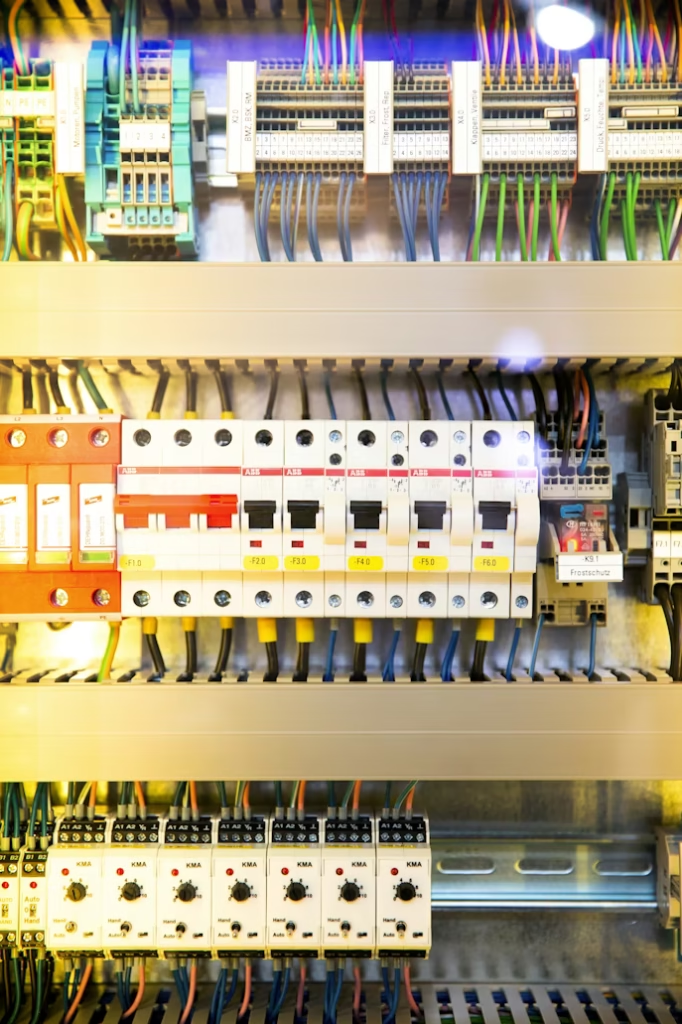
Motor overload tripping is one of the most common problems in industrial plants. It happens when the motor current exceeds the allowed limit for a certain period of time.
The overload relay or protection device trips to protect the motor from overheating and damage. In many cases, the trip is not the real problem. It is only a warning that something is wrong in the electrical system, mechanical load, or motor itself.
What Does Motor Overload Trip Mean?
A motor overload trip means the motor is drawing more current than it should.
This current may be higher than the motor full load current shown on the nameplate. If the high current continues, the motor winding temperature increases and the insulation may be damaged.
The overload protection trips to prevent motor failure.
Main Causes of Motor Overload Tripping
Motor overload tripping can happen due to electrical, mechanical, operational, or setting-related problems.
The most common causes include:
- Excessive mechanical load
- Bearing failure
- Pump blockage
- Conveyor jam
- Low voltage
- Phase loss
- Voltage imbalance
- Incorrect overload setting
- Frequent starting
- Poor motor ventilation
- Motor winding problem
- Wrong motor sizing
A good maintenance engineer should not reset the overload repeatedly without finding the root cause.
Excessive Mechanical Load
The most common reason for overload tripping is mechanical overload.
This means the motor is working harder than its design limit.
Examples include:
- Pump running against high pressure
- Conveyor overloaded with material
- Fan blades blocked by dust
- Gearbox problem
- Machine jam
- Compressor mechanical issue
When the load increases, the motor needs more torque. To produce more torque, the motor draws more current.
Bearing Failure
Damaged or dry bearings can increase friction.
When friction increases, the motor requires more power to rotate the shaft. This increases current and may cause overload trip.
Signs of bearing problems include:
- Abnormal noise
- High vibration
- High bearing temperature
- Rough rotation
- Grease leakage or contamination
Bearing condition should always be checked when a motor trips on overload.
Pump Blockage or Process Restriction
For pump motors, overload can happen due to process problems.
Possible causes include:
- Blocked suction line
- Blocked discharge line
- Closed valve
- High discharge pressure
- Wrong fluid viscosity
- Impeller problem
- Pump mechanical seal issue
The electrical technician should coordinate with the mechanical team before replacing electrical components.
Low Voltage
Low supply voltage can cause motor current to increase.
When the voltage drops, the motor tries to produce the required torque by drawing more current. This can lead to overheating and overload tripping.
Check the voltage between phases while the motor is running, not only when the motor is stopped.
Phase Loss
Phase loss is a serious electrical problem.
If one phase is missing, a three-phase motor may continue running for a short time but with very high current in the remaining phases. This can quickly damage the motor.
Possible causes include:
- Blown fuse
- Loose terminal
- Faulty contactor pole
- Cable damage
- Bad MCC connection
- Supply issue
Never keep resetting overload protection without checking all three phases.
Voltage Imbalance
Voltage imbalance between phases can create current imbalance.
Even a small voltage imbalance can create a much higher current imbalance in the motor. This leads to extra heating and possible overload trip.
Check phase-to-phase voltage:
- L1-L2
- L2-L3
- L3-L1
If the readings are not balanced, investigate the supply system.
Incorrect Overload Setting
Sometimes the motor is healthy, but the overload relay is set incorrectly.
The overload setting should be based on the motor nameplate full load current and the application requirement.
If the setting is too low, the motor may trip even under normal load.
If the setting is too high, the motor may not be protected properly.
Frequent Starting
Starting current is much higher than running current.
If the motor starts too many times in a short period, the motor and overload relay may heat up.
This is common in:
- Compressors
- Pumps
- Conveyors
- Fans
- Automatic systems with frequent start/stop signals
Check the duty cycle and starting frequency before changing protection settings.
Poor Ventilation
Motors need proper cooling.
If the cooling fan is damaged or the motor is covered with dust, the temperature will rise. High temperature can cause overload trip or thermal protection trip.
Check:
- Motor cooling fan
- Fan cover
- Airflow around the motor
- Dust accumulation
- Ambient temperature
- Motor installation area
Motor Winding Problem
Internal motor winding problems can also cause overload tripping.
Possible signs include:
- Unequal phase currents
- Low insulation resistance
- Burning smell
- Motor overheating
- Repeated tripping without mechanical load
- Abnormal noise
In this case, insulation resistance test and winding resistance test may be required.
Wrong Motor Sizing
If the motor is undersized for the application, it will continuously run near or above its rated current.
This may cause repeated overload trips, especially during heavy operation.
Always compare:
- Motor power
- Motor rated current
- Actual running current
- Load requirement
- Duty cycle
Troubleshooting Checklist
When a motor trips on overload, check the following:
| Check Point | What to Verify |
|---|---|
| Motor current | Compare actual current with nameplate FLA |
| Supply voltage | Check voltage while motor is running |
| Phase balance | Check voltage and current balance |
| Mechanical load | Check for jam, blockage, or high load |
| Bearings | Check noise, temperature, and vibration |
| Overload setting | Compare setting with motor nameplate |
| Starting frequency | Check if motor starts too often |
| Ventilation | Check cooling fan and dust |
| Motor insulation | Test insulation resistance if needed |
| Control circuit | Check contactor and protection wiring |
Field Example
A pump motor trips on overload after running for 10 minutes.
The electrical team checks the overload relay and finds it is set correctly. The voltage is normal and all three phases are available.
After checking the pump, the mechanical team finds that the discharge valve is partially closed and the pump is operating under high pressure.
In this case, the overload trip was caused by a process/mechanical issue, not an electrical fault.
What Not to Do
Do not keep resetting the overload without investigation.
Do not increase the overload setting without checking the motor nameplate and actual current.
Do not replace the overload relay before checking the mechanical load.
Do not assume every overload trip is an electrical problem.
Safety Notes
Before working on any motor, MCC panel, starter, or mechanical equipment, isolate the power supply and apply the approved lockout/tagout procedure.
Rotating equipment can be dangerous. Make sure the equipment is fully stopped and isolated before inspection.
Conclusion
Motor overload tripping is a protection action, not the main problem itself.
The real cause may be electrical, mechanical, process-related, or setting-related.
A proper troubleshooting approach should include checking voltage, current, overload setting, mechanical load, bearings, ventilation, and motor condition.
Repeated overload trips should always be investigated carefully before restarting the motor.