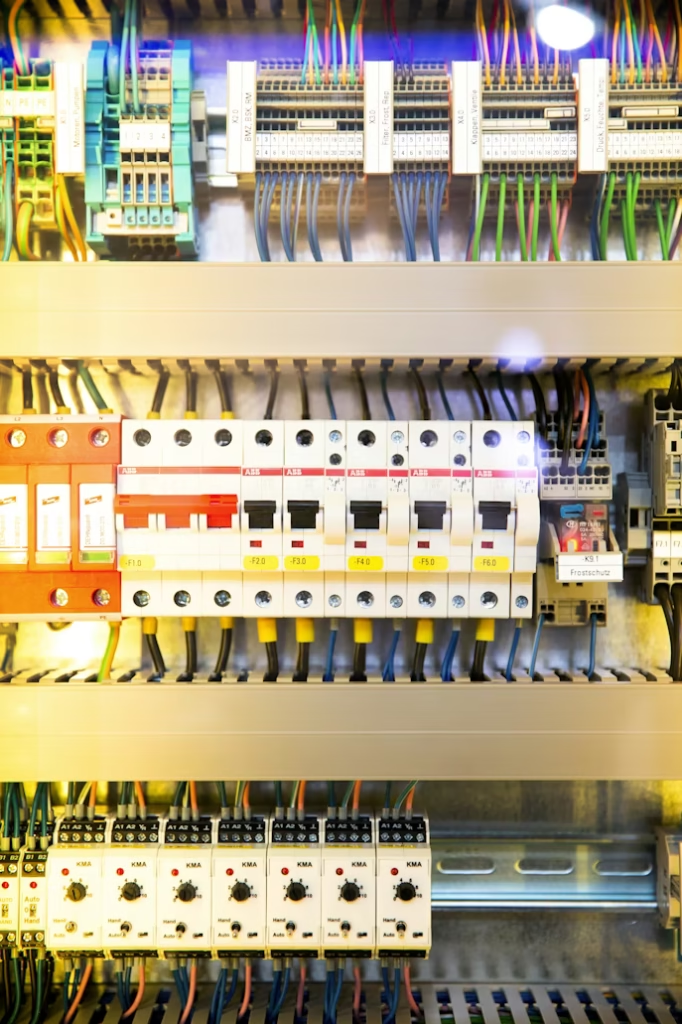
Selecting the correct contactor for an electric motor is an important task in industrial electrical maintenance.
A contactor is used to switch the motor on and off safely through a control circuit. If the contactor is undersized, it may overheat, weld its contacts, fail quickly, or damage the motor control system.
The correct contactor selection depends on motor power, voltage, current, utilization category, coil voltage, duty cycle, and site requirements.
What Is a Contactor?
A contactor is an electrically controlled switching device used to control power circuits.
In industrial plants, contactors are commonly used for:
- Electric motors
- Pumps
- Fans
- Compressors
- Conveyors
- Lighting circuits
- Heaters
- Capacitor banks
For motor applications, the contactor must be selected carefully because motor starting current is much higher than normal running current.
Main Information Required Before Selecting a Contactor
Before selecting a contactor, collect the following information:
- Motor power in kW or HP
- Motor rated voltage
- Motor full load current
- Number of phases
- Application type
- Starting method
- Coil control voltage
- Frequency
- Duty cycle
- Panel environment
- Required auxiliary contacts
The motor nameplate is the best starting point.
Check the Motor Full Load Current
The most important value is the motor full load current.
Do not select the contactor based only on motor kW or HP. Always check the motor current from the nameplate.
For example, two motors with the same kW rating may have different full load currents depending on efficiency, voltage, and design.
The contactor current rating must be suitable for the motor full load current and application category.
Understand Utilization Category
For motor applications, the utilization category is very important.
The most common utilization category for squirrel cage induction motors is AC-3.
AC-3 is used for starting and stopping motors during normal operation.
AC-1 is mainly for non-inductive or slightly inductive loads such as heaters. It should not be used as the main reference for motor contactor selection.
| Category | Typical Application |
|---|---|
| AC-1 | Resistive loads and heating |
| AC-3 | Standard squirrel cage motor starting and stopping |
| AC-4 | Plugging, inching, and reversing motor applications |
For most industrial motors, choose a contactor rated for AC-3 duty.
Select the Correct Coil Voltage
The contactor coil voltage must match the control circuit voltage.
Common coil voltages include:
- 24V DC
- 24V AC
- 110V AC
- 120V AC
- 220V AC
- 230V AC
- 240V AC
If the wrong coil voltage is selected, the contactor may not operate or the coil may burn.
Always verify the control voltage from the panel drawing or by measurement.
Check the Main Contact Rating
The main contacts carry the motor current.
The selected contactor should have a suitable AC-3 current rating equal to or higher than the motor full load current.
For example, if the motor full load current is 18A, do not select a contactor rated 18A without checking the manufacturer table. Choose the proper model recommended for the motor rating and voltage.
Consider Starting Method
The starting method affects contactor selection.
Common starting methods include:
- Direct Online starter
- Star-delta starter
- Forward-reverse starter
- Soft starter bypass
- VFD input contactor
- Two-speed motor starter
Each method may require different contactor ratings and auxiliary contacts.
For example, a star-delta starter uses three contactors: main, star, and delta. They must be selected according to the starter design and motor current.
Check Auxiliary Contacts
Auxiliary contacts are used for control and indication.
They may be normally open or normally closed.
Common uses include:
- Start holding circuit
- Interlocking
- Running indication
- PLC feedback
- Alarm circuit
- Electrical interlock between contactors
Before purchasing a contactor, check how many auxiliary contacts are required.
Some contactors have built-in auxiliary contacts, while others need separate auxiliary contact blocks.
Check Mechanical and Electrical Interlock Requirements
For forward-reverse or star-delta starters, interlocking is very important.
Interlocks prevent two contactors from closing at the same time.
There are two common types:
- Electrical interlock using auxiliary contacts
- Mechanical interlock using an interlock accessory
For reversing applications, a mechanical interlock is strongly recommended in addition to electrical interlocking.
Consider Ambient Temperature and Panel Ventilation
Electrical panels in industrial plants may operate in hot environments.
High temperature can reduce contactor life and affect performance.
Check:
- Panel temperature
- Ventilation
- Dust level
- Contactors installed side by side
- Manufacturer derating information
If the panel is hot or crowded, choose properly rated components and improve ventilation.
Common Mistakes in Contactor Selection
Common mistakes include:
- Selecting based only on ampere rating
- Using AC-1 rating for motor loads
- Ignoring coil voltage
- Ignoring auxiliary contact requirements
- Ignoring duty cycle
- Ignoring control circuit drawings
- Selecting a contactor without checking motor nameplate
- Replacing with a physically similar contactor only
- Ignoring mechanical interlock requirements
A contactor may look similar to the old one but still be electrically unsuitable.
Practical Selection Example
Assume you have a three-phase motor with the following data:
- Motor power: 7.5 kW
- Voltage: 400V
- Full load current: 15A
- Application: Pump
- Starting method: Direct Online
- Control voltage: 230V AC
In this case, the contactor should be selected for:
- Three-phase motor duty
- AC-3 utilization category
- Current rating suitable for 15A motor current
- 230V AC coil
- Required auxiliary contacts for control circuit
The final model should be selected from the manufacturer catalog.
Replacement Checklist
Before replacing a contactor, check:
| Item | Check |
|---|---|
| Main contact rating | Suitable for motor current |
| Utilization category | AC-3 for motor duty |
| Coil voltage | Matches control voltage |
| Number of poles | Matches application |
| Auxiliary contacts | Same or suitable arrangement |
| Mounting size | Fits panel space |
| Interlock | Required for reversing or star-delta |
| Brand compatibility | Check accessories and overload relay |
| Control wiring | Matches drawing |
| Application | DOL, star-delta, VFD, or soft starter |
Safety Notes
Before replacing or inspecting a contactor, isolate the power supply and apply the approved lockout/tagout procedure.
Verify absence of voltage before touching any terminals.
A contactor may have power terminals, control terminals, and auxiliary wiring from different sources. Always check all circuits before starting work.
Conclusion
Selecting the correct contactor for an electric motor requires more than matching the physical size or ampere number.
A good selection should consider motor full load current, utilization category, coil voltage, starting method, auxiliary contacts, duty cycle, and panel conditions.
For most standard motor applications, the contactor should be selected based on AC-3 duty and the actual motor nameplate current.