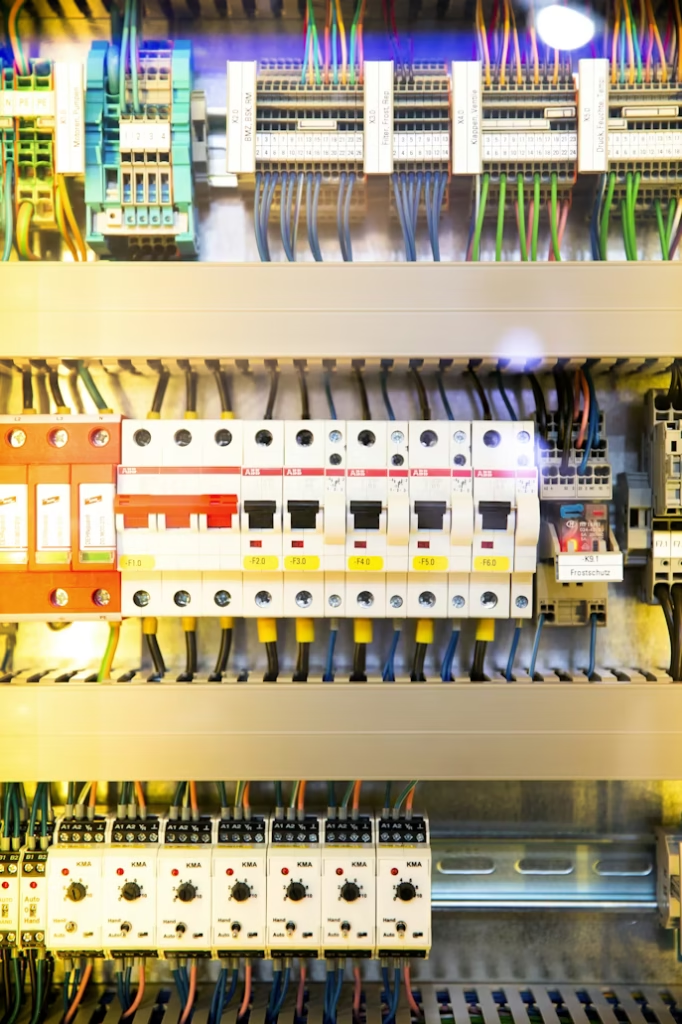
Electrical faults are common in industrial plants because electrical systems operate under load, heat, vibration, dust, humidity, and continuous production pressure.
A good maintenance engineer should understand common electrical faults, their symptoms, possible causes, and the correct troubleshooting approach.
This article explains the most common electrical faults found in industrial plants.
What Is an Electrical Fault?
An electrical fault is an abnormal condition in an electrical circuit or equipment.
It may cause:
- Equipment shutdown
- Breaker tripping
- Motor failure
- Cable overheating
- Control circuit failure
- Production stoppage
- Fire risk
- Electrical shock hazard
Electrical faults should be investigated carefully before restarting equipment.
Common Electrical Faults in Industrial Plants
The most common electrical faults include:
- Short circuit
- Earth fault
- Overload
- Phase loss
- Voltage imbalance
- Low voltage
- Loose connection
- Cable insulation failure
- Motor winding fault
- Control circuit fault
- Contactor failure
- Breaker nuisance tripping
- Overheating
- Harmonics
- Sensor or limit switch failure
Each fault requires a proper troubleshooting method.
Short Circuit Fault
A short circuit happens when current flows through an unintended low-resistance path.
This can create very high current and cause immediate tripping of protective devices.
Common causes include:
- Damaged cable insulation
- Loose wire touching another phase
- Water ingress
- Wrong wiring
- Failed electrical component
- Internal motor fault
- Foreign material inside panel
A short circuit must be treated seriously because it may cause arcing, fire, or equipment damage.
Earth Fault
An earth fault happens when a live conductor touches earth or grounded metal parts.
Common causes include:
- Damaged cable insulation
- Moisture inside motor terminal box
- Cable gland damage
- Motor winding insulation failure
- Water ingress inside panel
- Damaged heater or element
- Poor installation
Earth faults can be dangerous because exposed metal parts may become energized.
Overload Fault
An overload fault happens when equipment draws more current than its rated value for a period of time.
Common causes include:
- Mechanical overload
- Pump blockage
- Conveyor jam
- Bearing failure
- Low voltage
- Wrong overload setting
- Frequent starting
- Undersized motor
The overload trip is usually a protection action, not the root cause.
Phase Loss
Phase loss means one phase of a three-phase supply is missing.
This is a serious problem for three-phase motors.
Common causes include:
- Blown fuse
- Loose terminal
- Faulty contactor pole
- Cable damage
- Breaker pole failure
- Supply issue
- Bad connection in MCC
If a motor continues running with phase loss, it may overheat quickly and fail.
Voltage Imbalance
Voltage imbalance happens when the three-phase voltages are not equal.
This can cause current imbalance and motor overheating.
Possible causes include:
- Unequal single-phase loads
- Loose connections
- Transformer problem
- Long cable runs
- Supply issue
- Poor distribution system
Even a small voltage imbalance can create a larger current imbalance in motors.
Low Voltage
Low voltage can cause motors and equipment to draw higher current.
Common causes include:
- Weak power supply
- Long cable distance
- Undersized cable
- Transformer overload
- Loose connection
- High plant load
- Poor power distribution
Low voltage should be checked while the equipment is running, not only when it is stopped.
Loose Connection
Loose connections are one of the most common causes of electrical failure.
They can cause:
- Overheating
- Voltage drop
- Arcing
- Burnt terminals
- Equipment tripping
- Fire risk
Common locations include:
- Breaker terminals
- Contactor terminals
- Motor terminal box
- Cable lugs
- Busbar joints
- Terminal blocks
- Control terminals
Thermal imaging is useful for detecting loose connections under load.
Cable Insulation Failure
Cable insulation failure can cause short circuit, earth fault, or intermittent tripping.
Common causes include:
- Aging
- Heat
- Mechanical damage
- Water ingress
- Chemical exposure
- Rodent damage
- Poor installation
- Overloading
Insulation resistance testing can help identify cable insulation problems.
Motor Winding Fault
Motor winding faults can cause overload trips, earth faults, phase imbalance, or failure to start.
Possible signs include:
- Burning smell
- Unequal phase current
- Low insulation resistance
- High motor temperature
- Abnormal noise
- Repeated tripping
- Motor running weakly
Motor testing may include insulation resistance test, winding resistance test, and current measurement.
Control Circuit Fault
Control circuit faults are common in industrial equipment.
They may prevent equipment from starting or stopping correctly.
Common causes include:
- Blown control fuse
- Faulty push button
- Faulty selector switch
- Faulty relay
- Loose control wire
- Broken terminal
- PLC output problem
- Emergency stop activated
- Overload auxiliary contact open
- Interlock not satisfied
Control circuit troubleshooting should be done step by step using the electrical drawing.
Contactor Failure
Contactors are frequently used in motor control circuits and may fail over time.
Common contactor problems include:
- Burnt main contacts
- Weak coil
- Coil burning
- Mechanical sticking
- Humming noise
- Auxiliary contact failure
- Loose terminals
- Dust inside contactor body
A contactor should be selected and replaced according to rating, coil voltage, and application duty.
Breaker Nuisance Tripping
A breaker may trip repeatedly due to an actual fault or incorrect selection.
Possible causes include:
- Overload
- Short circuit
- Earth fault
- Weak breaker
- Incorrect breaker rating
- High inrush current
- Loose connection
- Harmonics
- High ambient temperature
Never keep resetting a breaker without investigating the cause.
Overheating
Overheating is a warning sign that should not be ignored.
Common causes include:
- Loose terminals
- Overload
- Poor ventilation
- Dust accumulation
- Undersized cable
- Weak contactor contacts
- High ambient temperature
- Harmonics
- Voltage imbalance
Common overheating locations include panels, motors, breakers, transformers, cables, and terminal boxes.
Harmonics
Harmonics are electrical distortions caused by non-linear loads.
Common sources include:
- VFDs
- UPS systems
- Rectifiers
- Welding machines
- LED drivers
- Electronic power supplies
Harmonics may cause:
- Transformer heating
- Cable heating
- Neutral overheating
- Breaker tripping
- Power quality problems
- Capacitor bank failure
Power quality analysis may be required when harmonics are suspected.
Sensor and Limit Switch Failure
Industrial machines often depend on sensors and limit switches.
Failure of these devices may stop equipment or create false alarms.
Common issues include:
- Misalignment
- Damaged cable
- Dirty sensor surface
- Broken actuator
- Loose connection
- Wrong adjustment
- Failed internal contact
Always check sensors physically and electrically.
Basic Troubleshooting Approach
A good troubleshooting approach includes:
| Step | Action |
|---|---|
| 1 | Understand the complaint |
| 2 | Check safety conditions |
| 3 | Review the electrical drawing |
| 4 | Check supply voltage |
| 5 | Check protection devices |
| 6 | Inspect visually |
| 7 | Measure current and voltage |
| 8 | Check control circuit |
| 9 | Check mechanical load |
| 10 | Identify root cause before restarting |
Tools Used for Electrical Troubleshooting
Common tools include:
- Multimeter
- Clamp meter
- Insulation resistance tester
- Thermal camera
- Phase sequence meter
- Test lamp
- Screwdriver set
- Torque screwdriver
- Electrical drawings
- PPE and lockout/tagout devices
The correct tool should be selected based on the fault and safety requirements.
What Not to Do
Do not:
- Reset protection repeatedly without investigation
- Bypass safety devices
- Increase overload settings without checking current
- Replace parts randomly
- Work on live equipment without approval
- Ignore burning smell
- Ignore hot terminals
- Assume the problem is electrical without checking mechanical load
Good troubleshooting is based on measurement, inspection, and logic.
Safety Notes
Electrical faults can be dangerous.
Before opening any panel or working on equipment, isolate the power supply, apply lockout/tagout, verify absence of voltage, and use proper PPE.
Always follow site electrical safety procedures.
Conclusion
Common electrical faults in industrial plants include short circuit, earth fault, overload, phase loss, voltage imbalance, low voltage, loose connections, cable insulation failure, motor winding faults, control circuit problems, contactor failure, breaker tripping, overheating, harmonics, and sensor failure.
A proper troubleshooting approach helps identify the real root cause and prevents repeated failures.
Electrical faults should always be handled safely, systematically, and according to approved procedures.