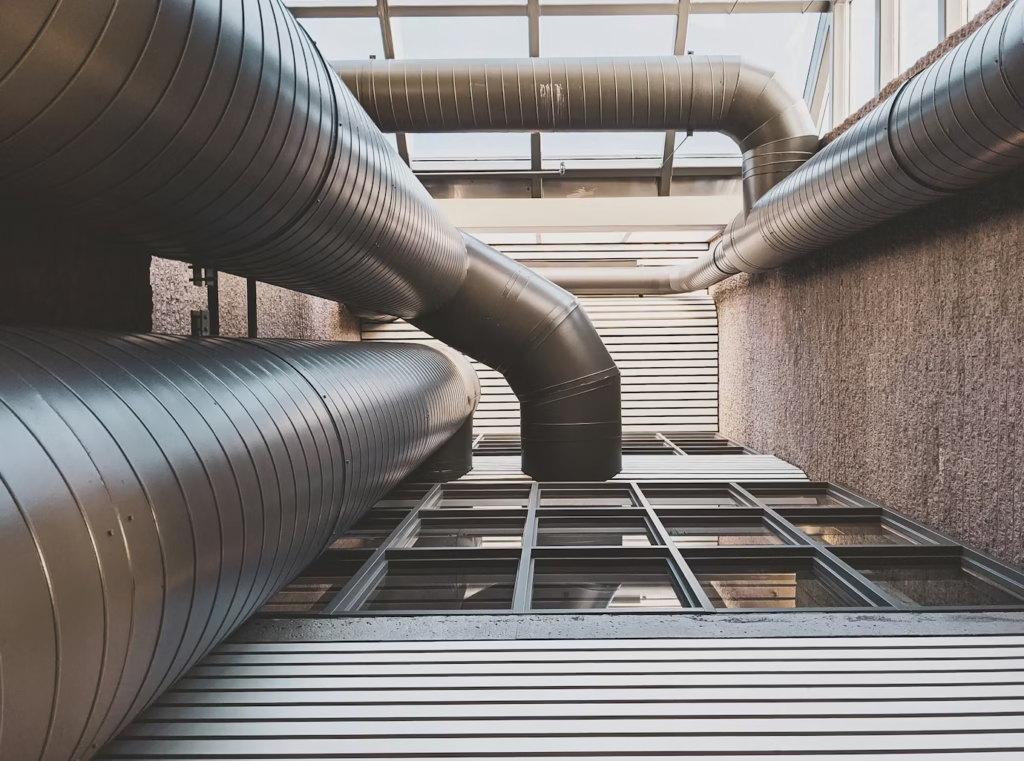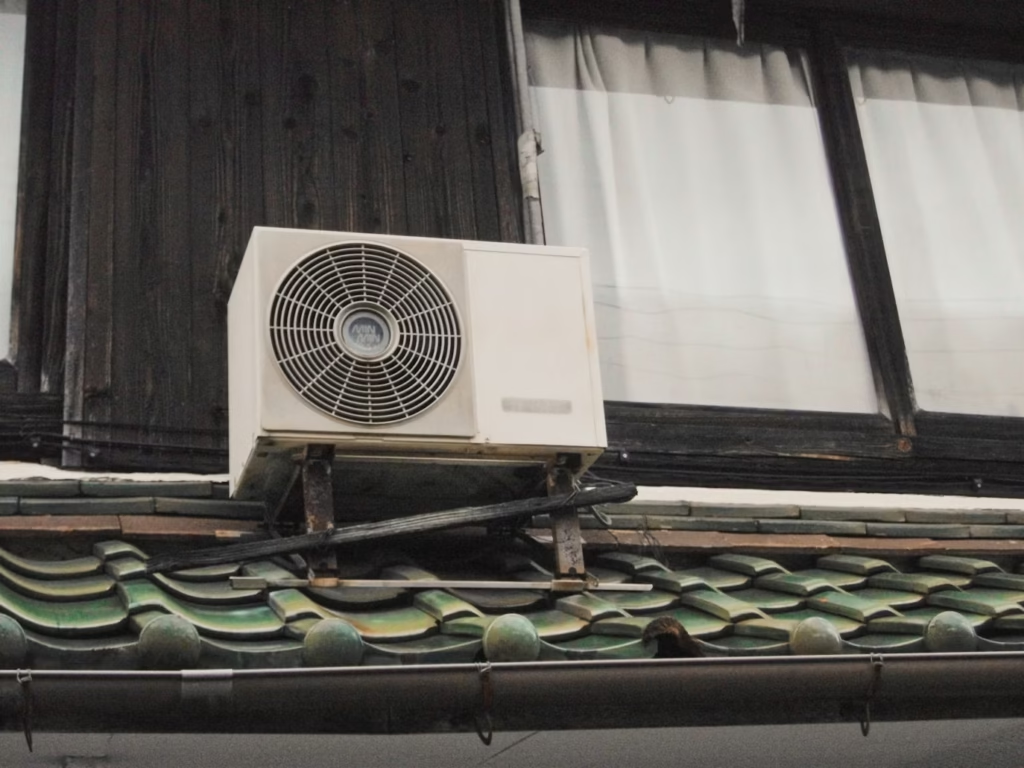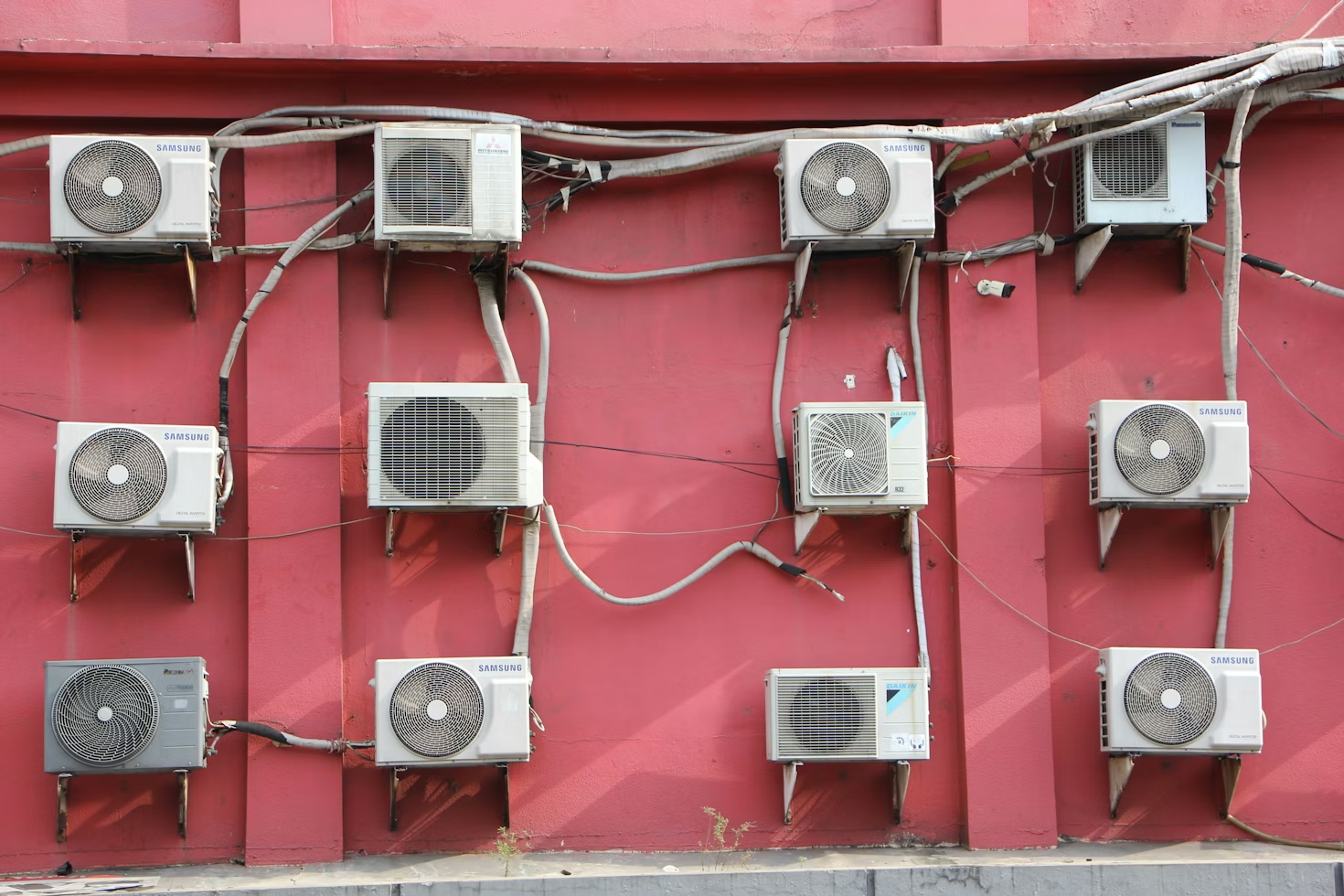
Air conditioning systems are important in industrial facilities, especially for offices, control rooms, electrical rooms, laboratories, workshops, and production support areas.
When an AC unit fails, it can affect worker comfort, electrical equipment temperature, production areas, and sensitive control systems.
Understanding common AC problems helps maintenance teams troubleshoot issues faster and reduce repeated failures.
Why AC Problems Happen in Industrial Facilities
Industrial facilities usually have harsh operating conditions compared to normal buildings.
AC units may be exposed to:
- Dust
- High ambient temperature
- Continuous operation
- Poor ventilation
- Vibration
- Dirty outdoor environment
- Electrical voltage fluctuation
- Poor maintenance
- Blocked filters
- Heavy cooling load
These conditions can cause frequent AC problems if preventive maintenance is weak.
Common AC Problems
The most common AC problems in industrial facilities include:
- Poor cooling
- AC not starting
- Water leakage
- Ice formation
- Compressor tripping
- Fan motor failure
- Dirty filters
- Dirty condenser coil
- Low refrigerant
- Bad smell
- Abnormal noise
- High energy consumption
- Thermostat problem
- Electrical control fault
- Drain blockage
Each problem should be checked carefully before replacing parts.
Poor Cooling
Poor cooling is one of the most common AC complaints.
Possible causes include:
- Dirty air filter
- Dirty evaporator coil
- Dirty condenser coil
- Low refrigerant
- Weak compressor
- Poor airflow
- Wrong thermostat setting
- High room heat load
- Outdoor unit blocked
- Duct leakage
- Fan motor problem
Before charging refrigerant, always check airflow and coil cleanliness.
AC Not Starting
If the AC unit does not start, the problem may be electrical or control-related.
Possible causes include:
- No power supply
- Tripped breaker
- Blown fuse
- Faulty thermostat
- Faulty control board
- Bad contactor
- Faulty capacitor
- Compressor overload trip
- Loose control wiring
- Safety switch open
Start troubleshooting by checking power supply and control signals.
Water Leakage
Water leakage is common in AC systems.
Possible causes include:
- Blocked drain pipe
- Dirty drain tray
- Poor drain slope
- Cracked drain pan
- Ice melting from evaporator coil
- Poor installation
- Condensation on uninsulated pipe
- High humidity
Drain lines should be cleaned regularly, especially in humid or dusty areas.
Ice Formation on Evaporator Coil
Ice formation usually indicates airflow or refrigerant problems.
Common causes include:
- Dirty air filter
- Dirty evaporator coil
- Low refrigerant
- Faulty indoor fan
- Blocked return air
- Thermostat issue
- Very low set temperature
- Restricted airflow
Do not keep running the unit when ice forms. Allow it to defrost and correct the cause.
Compressor Tripping
Compressor trips can happen due to electrical, refrigerant, or mechanical problems.
Possible causes include:
- Dirty condenser coil
- High discharge pressure
- Low refrigerant
- Weak capacitor
- Overload relay trip
- High ambient temperature
- Poor ventilation around outdoor unit
- Voltage fluctuation
- Compressor winding problem
- Short cycling
Repeated compressor trips should be investigated immediately.
Fan Motor Failure
Fan motors are critical for airflow.
Indoor fan failure can cause poor cooling and ice formation.
Outdoor fan failure can cause high pressure and compressor trip.
Possible causes include:
- Faulty capacitor
- Bearing failure
- Dust buildup
- Motor winding failure
- Loose wiring
- Overheating
- Fan blade obstruction
Check fan operation, motor current, capacitor, and wiring.
Dirty Air Filter
Dirty filters reduce airflow and cooling performance.
A dirty filter can cause:
- Poor cooling
- Ice formation
- High energy consumption
- Dust inside unit
- Bad smell
- Compressor stress
- Poor indoor air quality
In industrial areas, filters may require cleaning more frequently than office areas.
Dirty Condenser Coil
The condenser coil rejects heat to the outside air.
If it is dirty, heat rejection becomes poor.
This may cause:
- Poor cooling
- High compressor pressure
- Compressor trip
- High energy consumption
- Reduced compressor life
Outdoor units in dusty environments need regular cleaning.
Low Refrigerant
Low refrigerant usually indicates a leak.
Signs include:
- Poor cooling
- Ice formation
- Low suction pressure
- Compressor overheating
- Oil marks on refrigerant piping
- Long running time
Do not just top up refrigerant repeatedly. Find and repair the leak.
Bad Smell From AC
Bad smell may come from:
- Dirty filter
- Dirty evaporator coil
- Blocked drain
- Mold or bacteria growth
- Stagnant water in drain tray
- Dirty duct
- Poor ventilation
Cleaning the filter, coil, drain tray, and duct system may be required.
Abnormal Noise
Abnormal AC noise should not be ignored.
Possible causes include:
- Loose fan blade
- Worn bearing
- Loose panel
- Compressor noise
- Refrigerant noise
- Vibration from mounting
- Belt noise in some units
- Debris inside fan area
Identify the source before replacing components.
High Energy Consumption
AC units may consume more energy when not maintained properly.
Common causes include:
- Dirty filters
- Dirty coils
- Low refrigerant
- Poor insulation
- Duct leakage
- Wrong thermostat setting
- Compressor running continuously
- Oversized or undersized unit
- Poor room sealing
Regular maintenance helps reduce energy consumption.
Thermostat Problems
Thermostat or controller issues can cause poor operation.
Possible problems include:
- Wrong temperature reading
- Incorrect set point
- Sensor location problem
- Loose wiring
- Dead battery in some thermostats
- Faulty controller
- Wrong mode selection
- Communication fault in smart systems
Check thermostat setting and compare room temperature with actual reading.
Electrical Control Faults
AC systems contain several electrical components.
Common faulty components include:
- Contactor
- Capacitor
- Relay
- Control board
- Thermostat
- Overload protector
- Temperature sensor
- Pressure switch
- Breaker
- Fuse
Electrical troubleshooting should be done safely by qualified personnel.
Drain Blockage
Drain blockage causes water leakage and bad smell.
Common causes include:
- Dust
- Slime
- Mold
- Poor slope
- Blocked drain tray
- Insects or debris
- Poor installation
Drain cleaning should be part of regular preventive maintenance.
AC Troubleshooting Checklist
| Problem | Possible Cause | What to Check |
|---|---|---|
| Poor cooling | Dirty filter, low refrigerant, dirty coil | Filter, coil, refrigerant, airflow |
| Not starting | No power, thermostat, control fault | Breaker, fuse, thermostat, contactor |
| Water leakage | Drain blockage, ice melting | Drain line, tray, evaporator coil |
| Ice formation | Low airflow or low refrigerant | Filter, fan, coil, refrigerant |
| Compressor trip | High pressure, electrical fault | Condenser, capacitor, voltage |
| Bad smell | Dirty coil or drain | Filter, coil, drain tray |
| Abnormal noise | Fan, bearing, loose parts | Fan blade, motor, mounting |
| High energy | Poor maintenance or high load | Filters, coils, insulation, thermostat |
AC Preventive Maintenance Tips
To reduce AC problems:
- Clean filters regularly
- Clean condenser coils
- Clean evaporator coils
- Check drain lines
- Check fan motors
- Check compressor current
- Inspect refrigerant piping
- Check electrical terminals
- Inspect contactors and capacitors
- Record temperature readings
- Keep outdoor unit area clear
- Repair refrigerant leaks
Preventive maintenance is better than emergency repair.
Practical Field Example
An electrical room AC unit is running continuously but the room temperature remains high.
The technician checks the filter and finds it clogged with dust. The condenser coil is also dirty.
After cleaning the filter and condenser coil, the cooling performance improves and the compressor current returns closer to normal.
In this case, the problem was poor airflow and poor heat rejection, not compressor failure.
Common Mistakes
Common AC maintenance mistakes include:
- Adding refrigerant without checking for leaks
- Ignoring dirty filters
- Ignoring dirty condenser coil
- Not cleaning drain line
- Replacing compressor before checking electrical components
- Ignoring capacitor condition
- Not checking airflow
- Not recording readings
- Running AC with ice formation
- Poor access safety for outdoor units
Safety Notes
Before working on AC electrical components, isolate the power supply and follow lockout/tagout if required.
Do not touch rotating fans while the unit is running.
Refrigerant work should be done by trained personnel.
Use safe access equipment for rooftop or elevated AC units.
Follow site safety procedures at all times.
Conclusion
Common AC problems in industrial facilities include poor cooling, water leakage, ice formation, compressor tripping, fan motor failure, dirty filters, dirty coils, low refrigerant, bad smell, abnormal noise, thermostat faults, and drain blockage.
A proper troubleshooting approach should start with basic checks such as filters, airflow, coils, power supply, drain line, and control settings.
Regular preventive maintenance helps improve AC reliability, cooling performance, and energy efficiency.