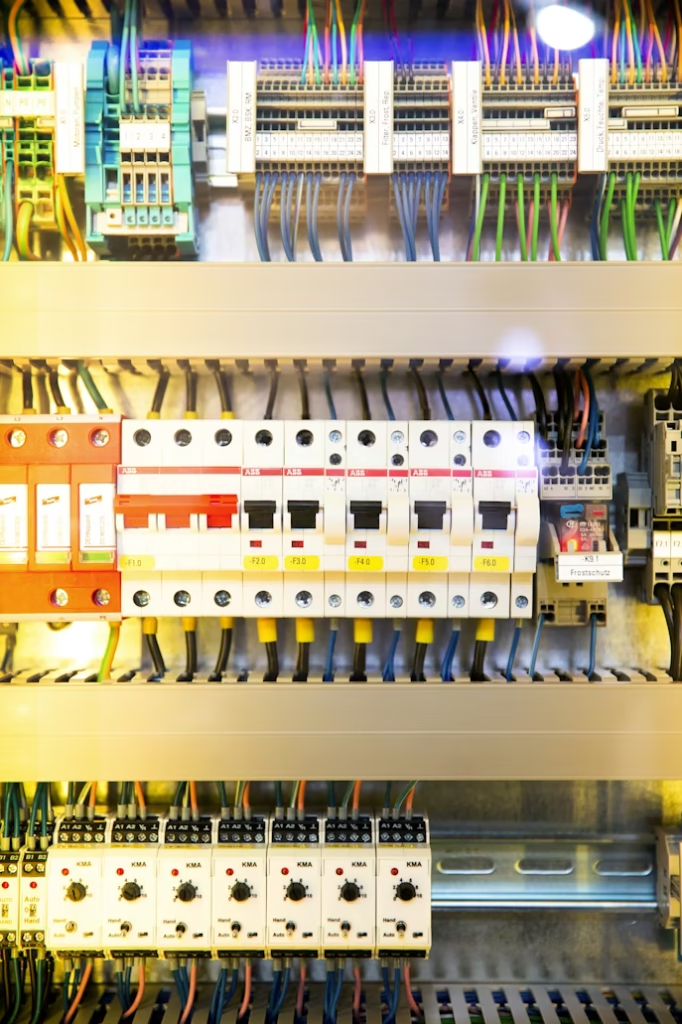
In industrial electrical maintenance, contactors, relays, and overload relays are common components inside control panels and MCC panels.
Although these devices may look similar to beginners, each one has a different function. Understanding the difference between them helps maintenance engineers troubleshoot motor control circuits correctly and avoid wrong replacement.
A contactor is mainly used to switch power loads such as motors. A relay is mainly used for control and signal circuits. An overload relay is used to protect motors from excessive current.
What Is a Contactor?
A contactor is an electrically operated switching device used to switch power circuits.
In industrial plants, contactors are commonly used to control:
- Electric motors
- Pumps
- Fans
- Compressors
- Conveyors
- Lighting circuits
- Heaters
- Capacitor banks
A contactor has a coil and main power contacts. When the coil is energized, the main contacts close and allow current to flow to the load.
What Is a Relay?
A relay is an electrically operated switching device used mainly in control circuits.
Relays are used to switch smaller currents compared to contactors.
Common relay applications include:
- Control logic
- Signal switching
- Alarm circuits
- PLC interface
- Interlocking
- Indication circuits
- Timer circuits
A relay can have normally open and normally closed contacts, allowing it to control different parts of a circuit.
What Is an Overload Relay?
An overload relay is a protection device used to protect electric motors from excessive current.
It does not normally switch the motor on and off by itself. Instead, it monitors the motor current and trips the control circuit when the current exceeds the set limit for a certain time.
When an overload relay trips, it usually opens a normally closed contact in the control circuit. This de-energizes the contactor coil and stops the motor.
Main Difference Between Contactor, Relay, and Overload Relay
| Item | Contactor | Relay | Overload Relay |
|---|---|---|---|
| Main Function | Switch power loads | Switch control signals | Protect motor from overload |
| Common Use | Motors and high-current loads | Control and logic circuits | Motor protection |
| Current Rating | Higher | Lower | Based on motor current |
| Main Contacts | Yes | Usually smaller contacts | No main switching function in most designs |
| Protection Function | No | No | Yes |
| Installed With Motor Starter | Yes | Sometimes | Yes |
| Trips on Overload | No | No | Yes |
How They Work Together in a Motor Starter
In a simple motor starter circuit:
- The contactor switches power to the motor.
- The control relay may be used for logic, interlock, or feedback.
- The overload relay protects the motor from excessive current.
When the start push button is pressed, the contactor coil energizes and closes the main contacts. The motor starts running.
If the motor draws too much current for too long, the overload relay trips and opens the control circuit. This turns off the contactor and stops the motor.
Contactor vs Relay
A contactor and relay are both switching devices, but they are designed for different current levels and applications.
A contactor is designed for power circuits and larger loads.
A relay is designed for control circuits and smaller loads.
For example, a contactor can be used to switch a 15 kW motor, while a relay may be used to send a signal to a PLC or switch an alarm lamp.
Contactor vs Overload Relay
A contactor starts and stops the motor.
An overload relay protects the motor from excessive current.
A contactor does not protect the motor from overload by itself. If a motor starter has only a contactor without overload protection, the motor may be damaged during overload conditions.
The overload relay is usually connected with the contactor in motor starter circuits.
Relay vs Overload Relay
A normal relay switches signals or control circuits.
An overload relay monitors motor current and trips when the motor current exceeds the set value.
A normal relay does not measure motor current. An overload relay is specifically designed for motor protection.
Common Mistakes
Common mistakes include:
- Thinking that a contactor provides overload protection
- Replacing an overload relay with a normal relay
- Selecting a contactor only based on physical size
- Ignoring coil voltage
- Ignoring overload setting
- Resetting overload relay without checking the root cause
- Using relay contacts for loads higher than their rating
- Confusing auxiliary contacts with main contacts
Practical Example
A pump motor does not start.
The technician checks the control panel and finds that the contactor coil is not energizing.
Possible causes may include:
- Stop push button open
- Overload relay tripped
- Control fuse blown
- No control voltage
- Faulty relay contact
- Faulty contactor coil
In this case, replacing the contactor immediately may not solve the issue. The control circuit must be checked step by step.
Troubleshooting Tips
When troubleshooting motor control circuits:
- Check control voltage
- Check contactor coil voltage
- Check overload relay status
- Check auxiliary contacts
- Check control fuses
- Check push buttons
- Check PLC output if applicable
- Check interlock contacts
- Check wiring terminals
- Check motor current after starting
A systematic approach prevents unnecessary replacement of good parts.
Safety Notes
Before working inside any control panel or MCC panel, isolate the power supply and apply the approved lockout/tagout procedure.
Control circuits and power circuits may have different voltage sources. Always verify all circuits before touching any terminals.
Conclusion
Contactors, relays, and overload relays are different components with different functions.
A contactor switches power loads.
A relay switches control signals.
An overload relay protects the motor from excessive current.
Understanding the difference between these components is essential for troubleshooting industrial motor control circuits correctly.