A Job Safety Analysis, or JSA, is an important safety document used before starting maintenance work. It helps identify job steps, hazards, and control measures before the work begins.
In industrial maintenance, JSA is commonly required for electrical work, mechanical work, work at height, hot work, confined space work, lifting activities, and shutdown jobs.
A good JSA helps the maintenance team understand the risks and perform the job safely.
What Is a JSA?
JSA stands for Job Safety Analysis.
It is a step-by-step review of a job to identify:
- The main work steps
- The hazards related to each step
- The control measures needed to reduce risk
- The responsible persons
- Required permits and PPE
The main purpose of a JSA is to prevent incidents before they happen.
Why JSA Is Important in Maintenance Work
Maintenance work often involves changing conditions, troubleshooting, isolation, tools, equipment, and different energy sources.
A JSA helps control risks such as:
- Electrical shock
- Arc flash
- Rotating equipment
- Stored pressure
- Dropped objects
- Hot surfaces
- Chemical exposure
- Pinch points
- Manual handling injuries
- Work at height
- Slip, trip, and fall hazards
Without a proper JSA, workers may miss important hazards.
When Is JSA Required?
A JSA may be required before:
- Electrical panel maintenance
- Motor replacement
- Pump maintenance
- Compressor maintenance
- Work at height
- Hot work
- Confined space entry
- Cable laying
- Transformer maintenance
- Crane maintenance
- Valve replacement
- Shutdown work
- Non-routine tasks
- Contractor work
Each company may have its own procedure defining when JSA is mandatory.
Main Parts of a JSA
A good JSA usually includes:
- Job title
- Work location
- Date and time
- Equipment tag number
- Work permit number
- Job steps
- Hazards for each step
- Control measures
- Required PPE
- Required tools
- Required permits
- Responsible persons
- Approval signatures
The JSA should be clear and easy for workers to understand.
How to Prepare a JSA
The basic process for preparing a JSA includes:
- Define the job scope.
- Break the job into steps.
- Identify hazards for each step.
- Define control measures.
- Identify required permits.
- Identify required PPE.
- Review with the work team.
- Get approval if required.
- Communicate the JSA during toolbox talk.
- Update the JSA if conditions change.
Step 1: Define the Job Scope
Start by clearly defining the job.
Example:
Replace a damaged motor coupling for cooling water pump P-101.
The scope should mention:
- Equipment name
- Equipment tag number
- Work location
- Type of work
- Expected duration
- Departments involved
- Special requirements
A clear scope prevents misunderstanding.
Step 2: Break the Job Into Steps
Do not write the job as one big activity.
Break it into logical steps.
For example, for pump coupling replacement:
- Prepare tools and spare parts.
- Obtain work permit.
- Stop pump.
- Apply LOTO.
- Remove coupling guard.
- Remove damaged coupling.
- Install new coupling.
- Perform alignment.
- Install coupling guard.
- Remove LOTO and test run.
Each step should be reviewed for hazards.
Step 3: Identify Hazards
For every job step, identify possible hazards.
Common maintenance hazards include:
- Electrical shock
- Stored energy
- Rotating parts
- Pinch points
- Sharp edges
- Heavy lifting
- Slips and trips
- Hot surfaces
- Noise
- Dust
- Chemical exposure
- Falling objects
- Poor lighting
- Working at height
- Pressurized systems
Hazards should be specific, not general.
Step 4: Define Control Measures
Control measures are actions used to reduce risk.
Examples include:
- Isolate power supply
- Apply lockout/tagout
- Verify zero energy
- Use proper PPE
- Use correct tools
- Barricade work area
- Use lifting equipment
- Use approved access platform
- Release pressure
- Allow equipment to cool
- Install guards after work
- Follow manufacturer instructions
- Assign competent workers
Control measures should be practical and directly related to the hazard.
Step 5: Identify Required Permits
Some work requires special permits.
Examples include:
- Electrical work permit
- Work at height permit
- Hot work permit
- Confined space permit
- Lifting permit
- Excavation permit
- Line breaking permit
- Cold work permit
The JSA should mention the required permits before work starts.
Step 6: Identify Required PPE
PPE depends on the job hazards.
Common PPE includes:
- Safety helmet
- Safety shoes
- Safety glasses
- Gloves
- Face shield
- Hearing protection
- Arc flash PPE
- Full body harness
- Respirator
- Coverall
- Chemical gloves
PPE should not be the only control measure. It is usually the last line of defense.
JSA Example for Electrical Panel Maintenance
| Job Step | Hazard | Control Measure |
|---|---|---|
| Obtain permit | Work starts without approval | Approved work permit required |
| Identify panel | Wrong panel isolation | Verify panel tag and location |
| Isolate power | Electrical shock | Switch off supply and apply LOTO |
| Verify zero voltage | Live circuit exposure | Test before touch using approved meter |
| Open panel | Sharp edges and dust | Use gloves and eye protection |
| Clean panel | Dust inhalation | Use approved cleaning method and PPE |
| Tighten terminals | Electrical hazard | Work only after isolation and verification |
| Close panel | Tools left inside | Final inspection before energization |
| Energize panel | Unexpected fault | Clear area and inform operation |
JSA Example for Pump Maintenance
| Job Step | Hazard | Control Measure |
|---|---|---|
| Stop pump | Unexpected movement | Coordinate with operation |
| Isolate motor | Electrical shock | Apply LOTO and verify zero energy |
| Isolate process | Pressure release | Close valves and release pressure |
| Remove guard | Rotating parts | Remove only after full isolation |
| Remove coupling | Pinch point | Use proper tools and gloves |
| Replace parts | Manual handling | Use correct lifting method |
| Perform alignment | Hand injury | Keep hands clear of pinch points |
| Install guard | Missing protection | Guard must be installed before startup |
| Test run | Vibration or leakage | Monitor equipment after startup |
JSA for Electrical Work
Electrical work may include hazards such as:
- Electric shock
- Arc flash
- Stored energy
- Wrong isolation
- Back-feed
- Live terminals
- Control voltage from another source
- Capacitor discharge
- Poor lighting
- Unauthorized access
Controls may include:
- Electrical permit
- LOTO
- Testing for absence of voltage
- Arc flash PPE where required
- Approved tools
- Barricade
- Competent electrician
- Updated electrical drawing
- No live work unless approved
JSA for Mechanical Work
Mechanical work may include hazards such as:
- Rotating parts
- Pinch points
- Heavy equipment
- Sharp edges
- Stored pressure
- Hot surfaces
- Falling objects
- Lifting hazards
- Oil leakage
- Slippery floor
Controls may include:
- Mechanical isolation
- LOTO
- Pressure release
- Lifting plan
- Proper tools
- Gloves
- Barricade
- Guard installation
- Good housekeeping
- Competent technician
JSA for Work at Height
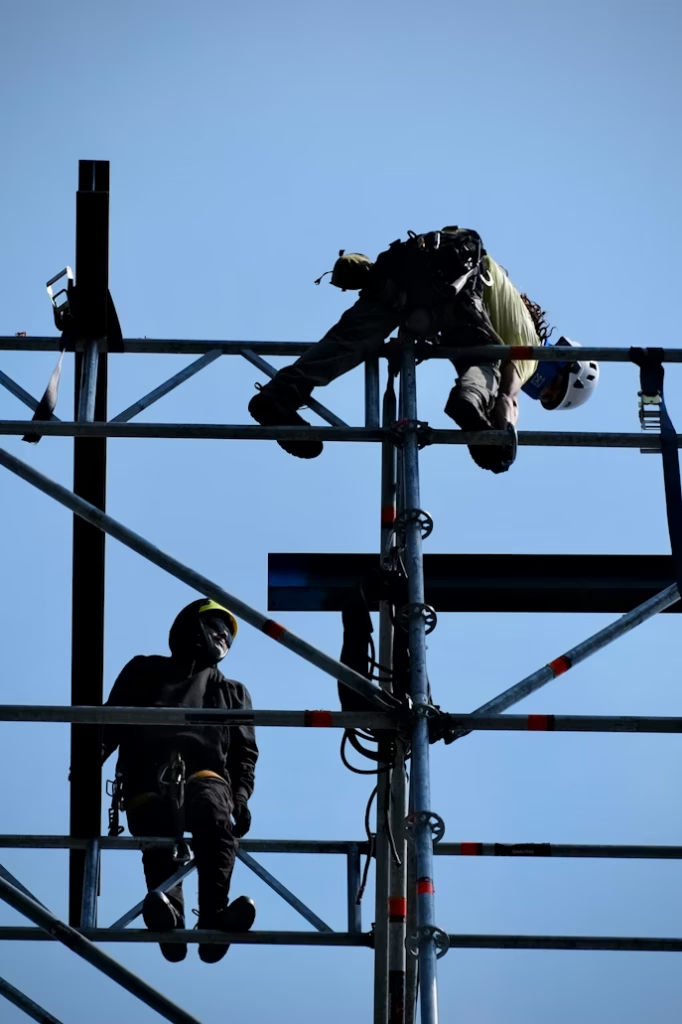
Work at height hazards include:
- Fall of person
- Falling tools
- Unsafe scaffolding
- Ladder slip
- Weak platform
- Poor anchor point
- Weather conditions
- No rescue plan
Controls may include:
- Work at Height permit
- Approved scaffold or platform
- Full body harness
- Tool lanyards
- Barricade below
- Rescue plan
- Competent workers
- Safety inspection before work
Toolbox Talk and JSA
A JSA should be discussed with the work team before starting the job.
During the toolbox talk, the supervisor should explain:
- Job scope
- Work steps
- Main hazards
- Control measures
- PPE requirements
- Permit conditions
- Emergency response
- Stop work authority
Workers should ask questions if anything is unclear.
Common JSA Mistakes
Common mistakes include:
- Copying an old JSA without review
- Writing general hazards only
- Missing stored energy hazards
- Not involving the work team
- Not updating JSA when conditions change
- Ignoring simultaneous work
- Missing permit requirements
- Weak control measures
- Not discussing JSA during toolbox talk
- Treating JSA as paperwork only
A JSA should reflect the real job conditions.
What Makes a Good JSA?
A good JSA should be:
- Specific to the job
- Easy to understand
- Step-by-step
- Practical
- Reviewed by the team
- Approved if required
- Updated when conditions change
- Linked to the work permit
- Communicated before work starts
Good JSA quality improves work safety.
Stop Work Authority
If conditions change or new hazards appear, workers should stop the job and review the JSA.
Examples include:
- Unexpected live power
- Missing isolation
- Unsafe access
- Weather change
- Equipment condition different from expected
- New simultaneous work
- Missing PPE
- Unclear instruction
Stopping the job is the right decision when safety is uncertain.
Safety Notes
A JSA does not replace work permits, LOTO procedures, manufacturer manuals, or site safety rules.
It supports the work by identifying hazards and controls.
Always follow approved company procedures and stop work if the job cannot be done safely.
Conclusion
A JSA is an important safety tool for electrical and mechanical maintenance work.
It helps identify job steps, hazards, control measures, required permits, and PPE before the work starts.
A good JSA should be practical, specific, reviewed with the team, and updated when conditions change.
Using JSA correctly helps reduce incidents and improve safety during industrial maintenance work.