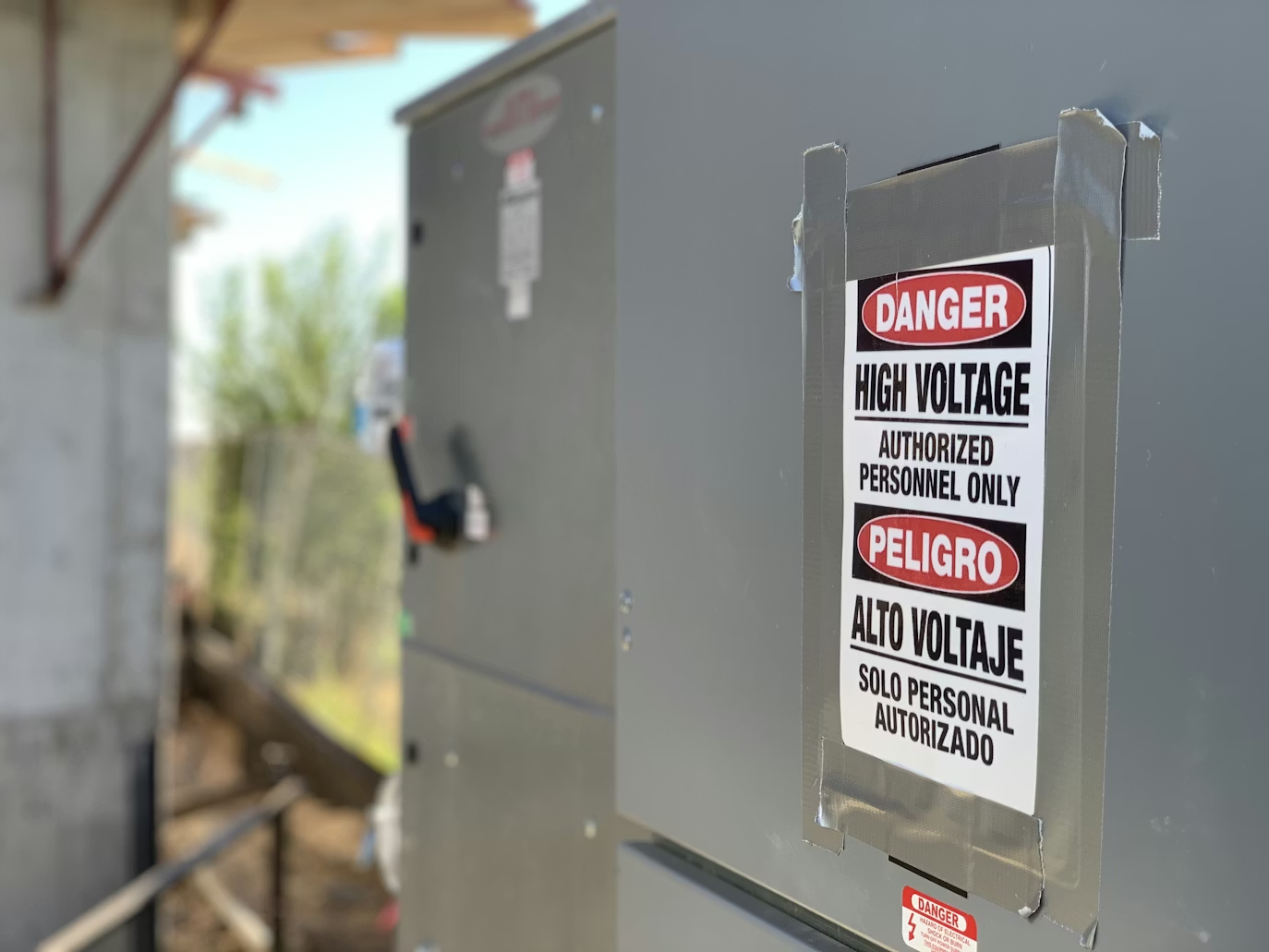
LOTO stands for Lockout/Tagout. It is a safety procedure used to isolate hazardous energy before maintenance, inspection, repair, cleaning, or troubleshooting work.
In industrial maintenance, LOTO is one of the most important safety controls because it helps prevent unexpected equipment startup, electrical shock, stored energy release, and serious injuries.
Maintenance teams should understand LOTO clearly before working on electrical panels, motors, pumps, compressors, conveyors, hydraulic systems, pneumatic systems, and rotating equipment.
What Does LOTO Mean?
LOTO means:
- Lockout: physically locking an energy isolation device to prevent operation.
- Tagout: attaching a warning tag to identify that equipment is under maintenance and must not be operated.
The lock prevents accidental energization.
The tag provides information and warning.
Both are important, but the lock is the main physical protection.
Why LOTO Is Important
Industrial equipment may contain different types of hazardous energy.
If the equipment starts unexpectedly during maintenance, it can cause serious injury or death.
LOTO helps protect workers from:
- Electrical shock
- Unexpected motor startup
- Rotating equipment movement
- Pressurized air release
- Hydraulic movement
- Steam or hot fluid release
- Stored mechanical energy
- Chemical release
- Falling or moving parts
A proper LOTO procedure makes maintenance work safer and more controlled.
Common Types of Hazardous Energy
Hazardous energy may come from several sources.
Common types include:
- Electrical energy
- Mechanical energy
- Hydraulic energy
- Pneumatic energy
- Thermal energy
- Chemical energy
- Stored energy
- Gravity energy
A good maintenance team should identify all energy sources before starting work.
Electrical Energy
Electrical energy is one of the most common hazards in maintenance.
Examples include:
- MCC panels
- Distribution boards
- Motors
- VFD panels
- Soft starters
- Transformers
- Control panels
- Lighting circuits
- UPS systems
Electrical isolation should be verified before work starts.
Mechanical Energy
Mechanical energy may exist in rotating or moving parts.
Examples include:
- Rotating shafts
- Couplings
- Belts
- Fans
- Conveyors
- Gearboxes
- Machine rollers
- Spring-loaded parts
Even after power is isolated, mechanical parts may still move due to stored energy.
Hydraulic and Pneumatic Energy
Hydraulic and pneumatic systems may remain pressurized after shutdown.
Examples include:
- Hydraulic cylinders
- Pneumatic cylinders
- Air receivers
- Compressor lines
- Hydraulic power packs
- Air-operated valves
- Pneumatic tools
Pressure should be released safely before maintenance.
Thermal Energy
Thermal energy can come from hot equipment, steam, oil, water, or process fluid.
Examples include:
- Steam lines
- Hot oil systems
- Boilers
- Heat exchangers
- Compressors
- Pumps handling hot fluids
Equipment should be allowed to cool or isolated properly before work.
Basic LOTO Steps
A typical LOTO process includes:
- Prepare for shutdown.
- Notify affected employees.
- Stop the equipment.
- Isolate all energy sources.
- Apply lock and tag.
- Release stored energy.
- Verify zero energy.
- Perform the work.
- Inspect the work area.
- Remove lock and tag after approval.
- Restart equipment safely.
Each site may have its own detailed LOTO procedure, and it must be followed.
Step 1: Prepare for Shutdown
Before applying LOTO, understand the equipment and its energy sources.
Check:
- Equipment tag number
- Location
- Electrical supply source
- Mechanical connections
- Hydraulic or pneumatic lines
- Stored pressure
- Hot surfaces
- Process connections
- Approved procedure
- Required permit
Preparation prevents missed isolation points.
Step 2: Notify Affected Employees
Before shutting down equipment, inform all affected employees.
This may include:
- Operation team
- Maintenance team
- Production team
- Safety team
- Contractors
- Control room
Clear communication helps avoid confusion and unsafe restart attempts.
Step 3: Stop the Equipment
Stop the equipment using the normal stopping procedure.
Do not use emergency stop as the main isolation method unless the approved procedure requires it.
The equipment should be stopped safely before energy isolation.
Step 4: Isolate Energy Sources
Isolate all energy sources using proper isolation points.
Examples include:
- Main breaker
- Disconnect switch
- MCC feeder
- Valve isolation
- Air supply isolation
- Hydraulic isolation
- Steam valve
- Process line isolation
More than one isolation point may be required.
Step 5: Apply Lock and Tag
After isolation, apply a personal lock and tag.
The tag should show information such as:
- Worker name
- Department
- Date
- Reason for isolation
- Contact information if required
- Equipment tag number
Only the authorized person who applied the lock should remove it, unless site procedure allows controlled removal under special approval.
Step 6: Release Stored Energy
Stored energy must be released or controlled.
Examples include:
- Discharging capacitors
- Releasing air pressure
- Draining hydraulic pressure
- Releasing spring tension
- Blocking moving parts
- Draining hot fluid safely
- Lowering suspended loads
- Securing raised equipment
Stored energy is often missed and can be very dangerous.
Step 7: Verify Zero Energy
Verification is one of the most important LOTO steps.
For electrical work, verify absence of voltage using an approved tester.
For mechanical, hydraulic, or pneumatic systems, verify that pressure, movement, and stored energy are controlled.
Do not rely only on the lock. Always verify.
Step 8: Perform the Work
After isolation and verification, maintenance work may start.
During the work:
- Keep locks and tags in place
- Do not bypass isolation
- Do not remove another person’s lock
- Keep the work area controlled
- Follow the work permit and JSA
- Use proper PPE
- Stop work if conditions change
Step 9: Inspect Before Restart
Before removing LOTO and restarting equipment, inspect the work area.
Check:
- Tools removed
- Guards installed
- Covers closed
- Workers clear
- Loose parts removed
- Panels closed
- Valves returned to correct position
- Area clean
- Safety devices restored
Do not restart equipment if the area is not safe.
Step 10: Remove Lock and Tag
Locks and tags should be removed according to the approved site procedure.
Normally, each worker removes his own personal lock.
Before removal, confirm that work is complete and equipment is ready for operation.
Step 11: Restart Equipment Safely
After LOTO removal, restart equipment according to the normal startup procedure.
Coordinate with operation team and confirm that all affected employees are aware.
Monitor equipment after startup for abnormal noise, vibration, leakage, alarms, or trips.
LOTO Checklist
| Step | What to Verify |
|---|---|
| Equipment identified | Correct tag number and location |
| Energy sources identified | Electrical, mechanical, hydraulic, pneumatic, thermal |
| Affected employees notified | Operation and maintenance informed |
| Equipment stopped | Normal shutdown completed |
| Isolation applied | Breakers, valves, switches locked |
| Lock and tag installed | Correct personal lock and tag |
| Stored energy released | Pressure, capacitors, springs, gravity controlled |
| Zero energy verified | Absence of voltage or pressure confirmed |
| Work performed safely | Permit and JSA followed |
| Area inspected | Tools removed and guards installed |
| LOTO removed | According to site procedure |
| Equipment restarted | Safe startup and monitoring completed |
Common LOTO Mistakes
Common mistakes include:
- Not identifying all energy sources
- Forgetting stored energy
- Using tag only without lock
- Relying on emergency stop as isolation
- Not verifying zero energy
- Removing another person’s lock
- Restarting equipment without inspection
- Not informing affected employees
- Working on the wrong equipment
- Bypassing safety devices
- Poor communication between shifts
These mistakes can lead to serious incidents.
Practical Example
A technician needs to replace a motor coupling on a pump.
The team isolates the motor electrical supply and applies a lock and tag.
However, the pump is connected to process piping and may still contain pressure. The coupling area may also have rotating parts and stored mechanical energy.
A proper LOTO process should include electrical isolation, verification of zero voltage, process isolation if required, pressure release, and ensuring the pump cannot rotate unexpectedly.
This example shows why all energy sources must be considered, not only electrical power.
LOTO for Electrical Maintenance
For electrical maintenance, LOTO may be required before working on:
- MCC panels
- Distribution boards
- Motors
- Transformers
- VFDs
- Soft starters
- Control panels
- Cable termination
- Lighting circuits
Always verify absence of voltage before touching conductors.
LOTO for Mechanical Maintenance
For mechanical maintenance, LOTO may be required before working on:
- Pumps
- Fans
- Compressors
- Conveyors
- Gearboxes
- Couplings
- Valves
- Hydraulic systems
- Pneumatic systems
Mechanical isolation may include blocking, depressurizing, draining, or securing moving parts.
Who Is Responsible for LOTO?
LOTO responsibility may include:
- Authorized employees who apply locks and tags
- Affected employees who operate or work near equipment
- Supervisors who ensure compliance
- Safety team who audits and supports the process
- Maintenance engineers who plan safe work
- Operation team who coordinate equipment shutdown and startup
Everyone involved must understand their role.
Safety Notes
LOTO is a critical safety procedure.
Never start maintenance work until the equipment is properly isolated, locked, tagged, and verified.
Never remove another worker’s lock without following the approved site procedure.
If there is any doubt about isolation, stop work and confirm before continuing.
Conclusion
LOTO is one of the most important safety procedures in industrial maintenance.
It protects workers from unexpected startup, electrical shock, pressure release, stored energy, and moving equipment.
A proper LOTO process includes preparation, notification, shutdown, isolation, lock and tag application, stored energy release, zero energy verification, safe work execution, inspection, controlled removal, and safe restart.
Following LOTO correctly helps prevent serious injuries and improves maintenance safety.