Shaft alignment is one of the most important maintenance activities for rotating equipment in industrial plants.
It is commonly required for pumps, motors, compressors, fans, gearboxes, blowers, and other machines connected by a coupling.
Poor shaft alignment can cause high vibration, bearing failure, mechanical seal failure, coupling damage, overheating, and unexpected equipment breakdown.
What Is Shaft Alignment?
Shaft alignment is the process of positioning two connected shafts so that their centerlines are properly aligned during operation.
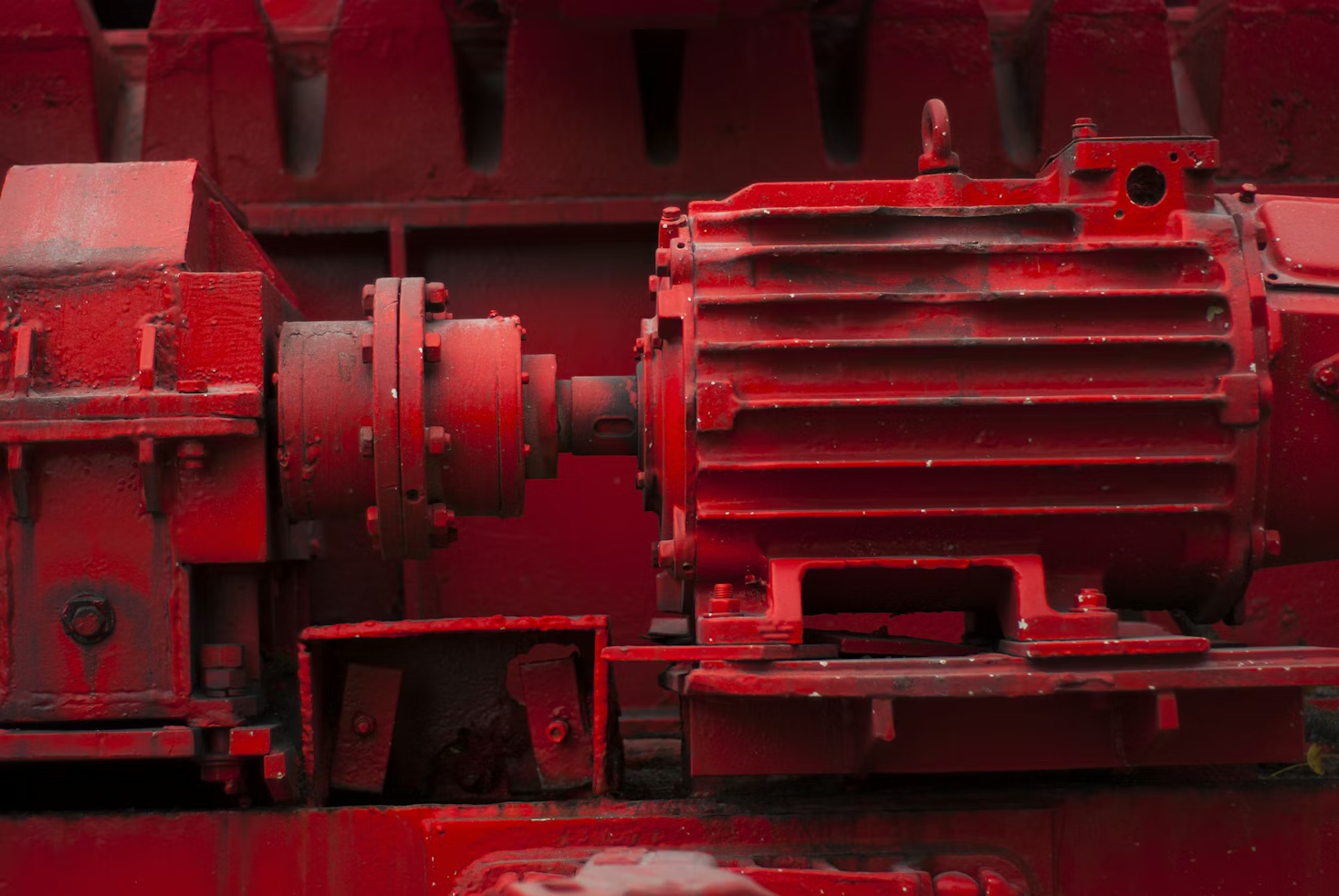
For example, in a motor and pump set, the motor shaft and pump shaft must be aligned correctly so the coupling can transfer power smoothly.
The goal of shaft alignment is to reduce mechanical stress on the equipment and allow smooth rotation.
Why Shaft Alignment Is Important
Proper shaft alignment improves equipment reliability and reduces maintenance problems.
Good alignment helps reduce:
- Vibration
- Bearing load
- Mechanical seal damage
- Coupling wear
- Shaft stress
- Energy loss
- Heat generation
- Unexpected breakdowns
Even a small misalignment can create serious problems over time.
Equipment That Requires Shaft Alignment
Shaft alignment is commonly required for:
- Motor and pump sets
- Motor and gearbox sets
- Motor and fan systems
- Compressors
- Blowers
- Cooling tower fans
- Conveyor drives
- Hydraulic power units
- Rotating machines with couplings
Any rotating equipment connected through a coupling should be checked for alignment.
Types of Shaft Misalignment
There are two main types of shaft misalignment:
- Parallel misalignment
- Angular misalignment
In many real applications, both types may happen at the same time.
Parallel Misalignment
Parallel misalignment happens when two shafts are parallel but not on the same centerline.
This means one shaft is higher, lower, or shifted sideways compared to the other.
Parallel misalignment can cause vibration, bearing stress, coupling wear, and seal damage.
Angular Misalignment
Angular misalignment happens when two shafts are at an angle to each other.
This means the centerlines of the two shafts are not parallel.
Angular misalignment can create extra stress on bearings, seals, shafts, and couplings.
Common Causes of Shaft Misalignment
Shaft misalignment can happen for many reasons, including:
- Poor installation
- Foundation movement
- Soft foot
- Pipe strain
- Thermal expansion
- Loose base bolts
- Incorrect shimming
- Equipment movement during operation
- Coupling replacement
- Motor or pump replacement
- Improper maintenance work
Alignment should be checked after major equipment work.
What Is Soft Foot?
Soft foot is a condition where one or more machine feet do not sit properly on the base.
When the mounting bolts are tightened, the machine frame may twist, causing misalignment and vibration.
Soft foot should be corrected before final shaft alignment.
Common causes of soft foot include:
- Uneven base
- Dirt under machine feet
- Bent baseplate
- Incorrect shims
- Damaged mounting surface
- Loose foundation
What Is Pipe Strain?
Pipe strain happens when connected piping applies force on the pump casing.
This can move the pump and disturb shaft alignment.
Common causes include:
- Poor piping support
- Forced pipe connection
- Misaligned flanges
- Thermal expansion
- Heavy pipe load on pump nozzles
Pipe strain should be corrected before alignment.
Signs of Poor Shaft Alignment
Common signs of poor alignment include:
- High vibration
- Coupling wear
- Bearing overheating
- Mechanical seal leakage
- Abnormal noise
- Frequent bearing failure
- Frequent seal failure
- Loose foundation bolts
- High motor current in some cases
- Equipment movement during operation
If these symptoms repeat, alignment should be checked.
Shaft Alignment Methods
Common shaft alignment methods include:
- Straightedge method
- Dial indicator method
- Laser alignment method
Each method has advantages and limitations.
Straightedge Alignment
Straightedge alignment is a basic method.
It may be used for rough alignment only.
It is simple and low cost but not accurate enough for many industrial applications.
Straightedge alignment should not be considered final alignment for critical rotating equipment.
Dial Indicator Alignment
Dial indicator alignment is more accurate than the straightedge method.
It uses dial gauges to measure shaft position and calculate correction values.
This method requires skill, proper setup, and careful measurement.
It is still widely used in many industrial plants.
Laser Alignment
Laser alignment is one of the most accurate and efficient shaft alignment methods.
It uses laser sensors and a display unit to measure misalignment and guide correction.
Laser alignment is commonly used for critical equipment because it provides accurate results and documentation.
Basic Shaft Alignment Procedure
A typical shaft alignment procedure includes:
- Obtain work permit.
- Isolate equipment and apply lockout/tagout.
- Remove coupling guard.
- Inspect coupling condition.
- Check base and foundation.
- Check and correct soft foot.
- Check pipe strain if applicable.
- Perform rough alignment.
- Perform final alignment using dial indicator or laser tool.
- Adjust machine position using shims.
- Tighten bolts properly.
- Recheck alignment after tightening.
- Install coupling guard.
- Test run the equipment.
- Record alignment report.
Alignment Checklist
| Check Point | What to Verify |
|---|---|
| Safety isolation | Power isolated and LOTO applied |
| Coupling guard | Removed only after isolation |
| Coupling condition | No cracks, wear, or damage |
| Foundation | Stable and no cracks |
| Base bolts | Tight and in good condition |
| Soft foot | Checked and corrected |
| Pipe strain | Checked if pump is connected to piping |
| Shims | Clean, flat, and proper size |
| Alignment reading | Within acceptable tolerance |
| Final tightening | Bolts tightened properly |
| Guard installation | Coupling guard installed after work |
| Test run | Vibration and noise checked |
| Report | Alignment results recorded |
Importance of Shims
Shims are used to adjust machine height during alignment.
Good shimming practice is important for accurate alignment.
Use clean, flat, and proper stainless steel shims if available.
Avoid using too many shim layers because this can create instability.
Do not use damaged, rusty, or soft material as shims.
Alignment Tolerance
Alignment tolerance depends on equipment speed, coupling type, manufacturer recommendation, and site standard.
High-speed machines usually require tighter alignment than low-speed machines.
Always follow manufacturer recommendations or approved site standards.
Hot Alignment and Thermal Growth
Some machines change position when they reach operating temperature.
This is called thermal growth.
For critical machines, alignment may need to consider operating temperature and thermal expansion.
In such cases, manufacturer recommendations should be followed.
Common Alignment Mistakes
Common mistakes include:
- Performing alignment without correcting soft foot
- Ignoring pipe strain
- Using dirty or damaged shims
- Not tightening bolts before final reading
- Not rechecking after tightening
- Using straightedge as final alignment for critical equipment
- Ignoring thermal growth
- Not recording alignment results
- Removing coupling guard while equipment is energized
- Starting equipment before installing guard
Practical Field Example
A centrifugal pump has repeated mechanical seal failure.
The seal is replaced several times, but the leakage returns after a short period.
After checking the pump, the maintenance team finds that the motor and pump shafts are misaligned and the coupling element is worn.
In this case, replacing the seal alone is not enough. The root cause is poor alignment.
After proper shaft alignment, seal life improves and vibration is reduced.
Maintenance Tips
To improve equipment reliability:
- Check alignment after motor replacement
- Check alignment after pump overhaul
- Correct soft foot before alignment
- Check pipe strain in pump systems
- Use proper shims
- Record alignment readings
- Monitor vibration after startup
- Inspect coupling condition regularly
- Do not ignore repeated seal or bearing failures
Safety Notes
Before performing shaft alignment, isolate the equipment and apply lockout/tagout.
Rotating equipment is dangerous. Never remove coupling guards while the machine is running.
After alignment, reinstall all guards before starting the equipment.
Follow site safety procedures and use proper PPE.
Conclusion
Shaft alignment is essential for reliable operation of rotating equipment.
Poor alignment can cause vibration, bearing failure, mechanical seal damage, coupling wear, overheating, and repeated breakdowns.
A proper alignment process should include safety isolation, soft foot correction, pipe strain checking, accurate measurement, proper shimming, final verification, and documentation.
Good shaft alignment improves equipment life, reduces maintenance cost, and increases plant reliability.