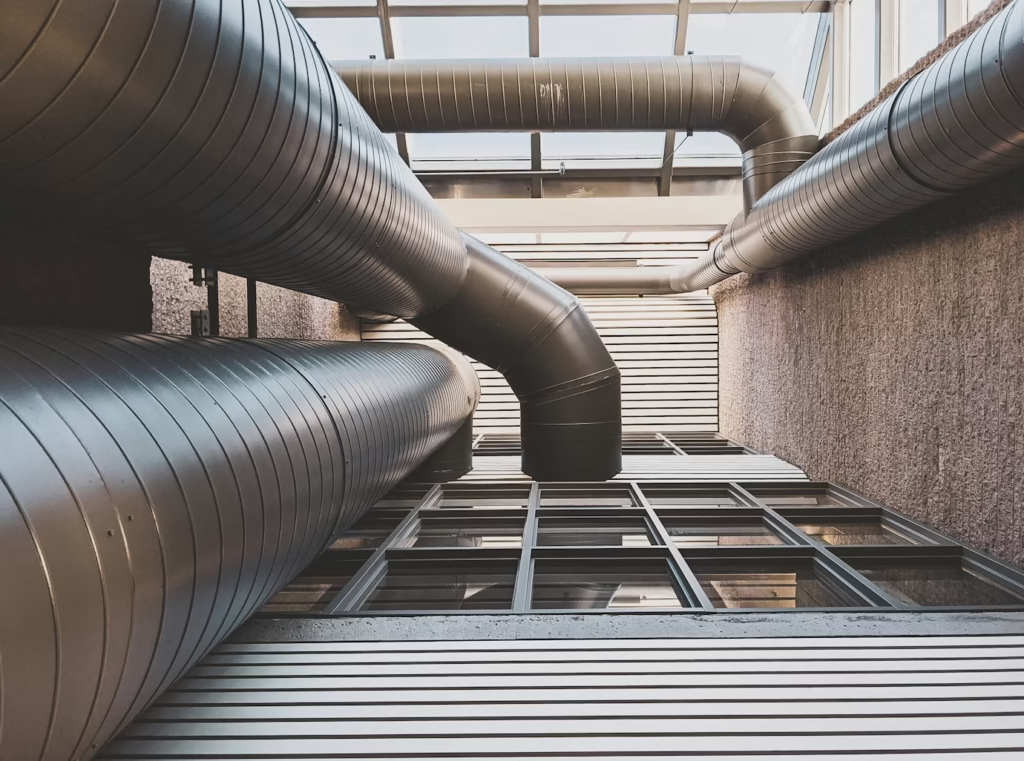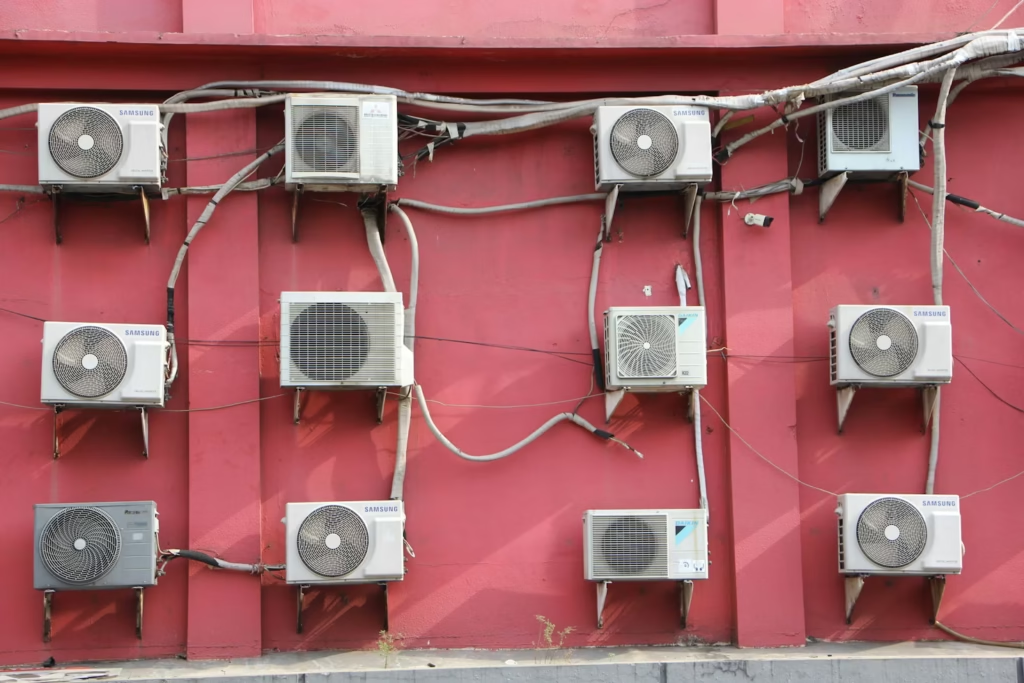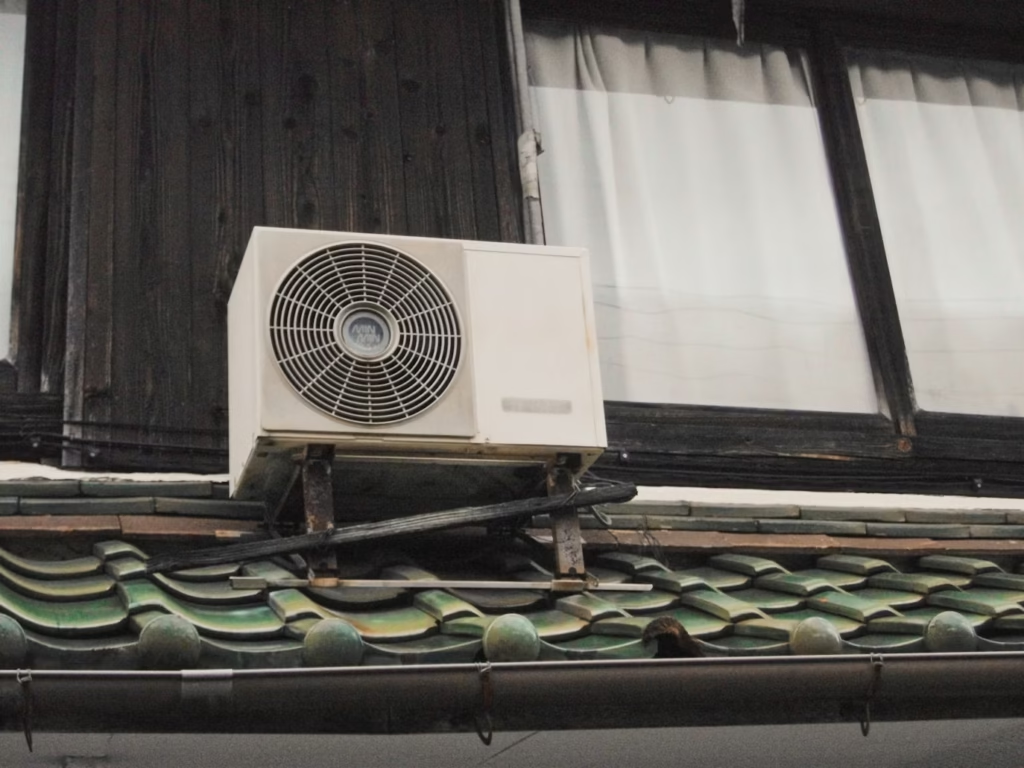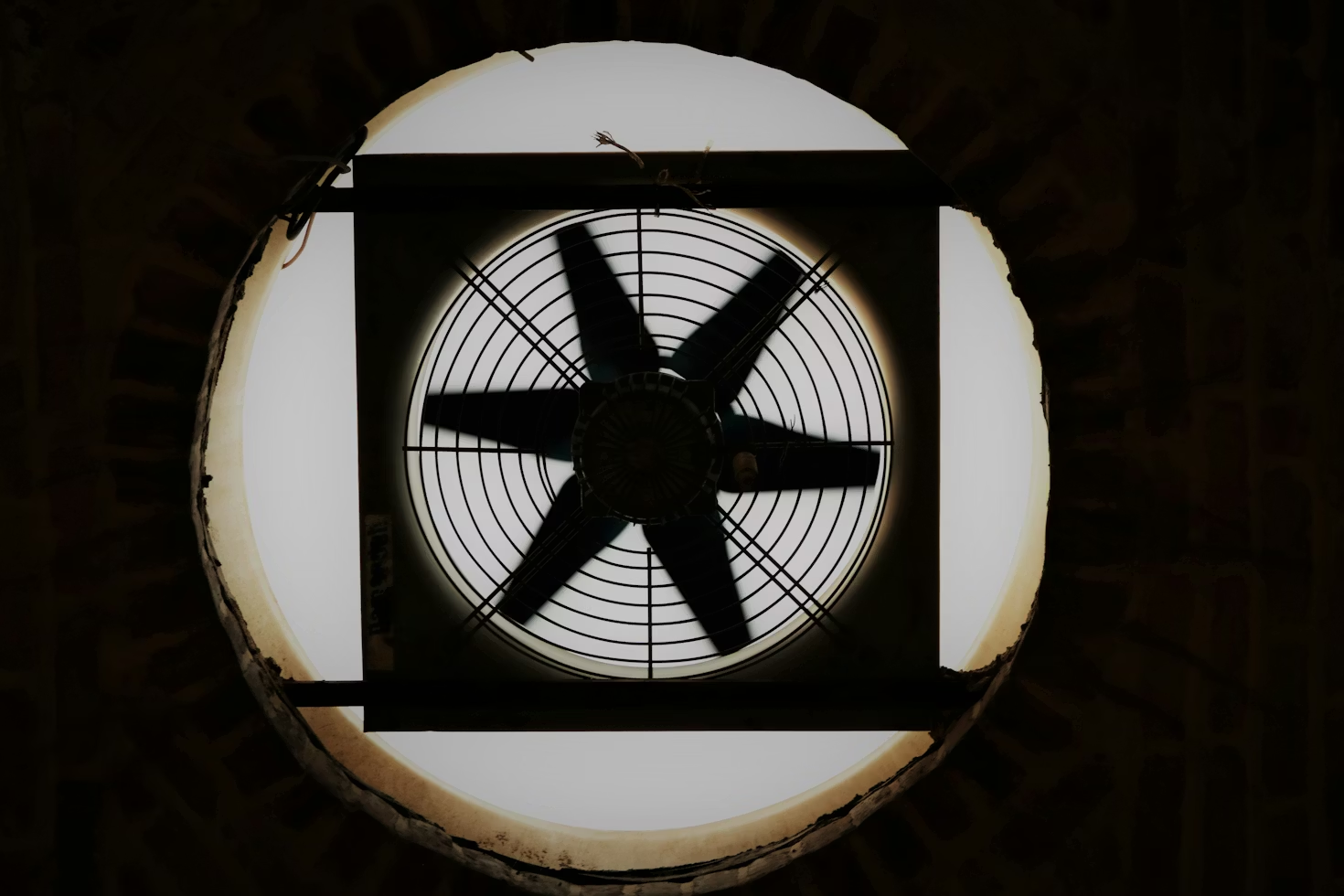
Exhaust fans are important equipment in industrial facilities. They are used to remove hot air, fumes, dust, smoke, moisture, odors, and contaminated air from production areas, workshops, utility rooms, warehouses, battery rooms, chemical areas, and HVAC systems.
A failed exhaust fan can cause poor ventilation, high temperature, bad air quality, unsafe working conditions, and equipment overheating.
Preventive maintenance helps keep exhaust fans reliable, safe, and efficient.
What Is an Exhaust Fan?
An exhaust fan is a mechanical ventilation device used to remove air from an area and discharge it outside or to another ventilation path.
In industrial facilities, exhaust fans may be installed in:
- Production areas
- Electrical rooms
- Compressor rooms
- Battery rooms
- Chemical storage areas
- Pump rooms
- Workshops
- Warehouses
- HVAC duct systems
- Roof ventilation systems
- Dust or fume extraction systems
The fan may be axial, centrifugal, wall-mounted, roof-mounted, or duct-mounted depending on the application.
Why Exhaust Fan Maintenance Is Important
Exhaust fans often operate in dusty, hot, humid, or contaminated environments.
Without maintenance, exhaust fans may develop problems such as:
- Low airflow
- High vibration
- Abnormal noise
- Motor overheating
- Belt failure
- Bearing failure
- Dust buildup
- Loose blades
- Electrical trip
- Damaged guards
- Poor ventilation
- High energy consumption
Regular maintenance helps prevent these problems.
Safety Before Exhaust Fan Maintenance
Before starting exhaust fan maintenance, follow site safety procedures.
Basic safety steps include:
- Inform the affected area or operation team
- Stop the fan safely
- Isolate electrical power
- Apply lockout/tagout
- Wait until the fan fully stops
- Use proper PPE
- Use safe access equipment if the fan is elevated
- Follow work at height requirements if applicable
- Keep tools away from rotating parts
- Reinstall all guards before startup
Never inspect fan blades or belts while the fan is running.
Exhaust Fan Preventive Maintenance Checklist
| Inspection Point | What to Check |
|---|---|
| Fan blades | Dust, damage, cracks, looseness, and balance |
| Fan motor | Noise, temperature, current, and vibration |
| Bearings | Noise, temperature, and lubrication |
| Belt drive | Belt tension, cracks, wear, and alignment |
| Pulley | Wear, alignment, and looseness |
| Guard | Installed, secure, and not damaged |
| Ducting | Blockage, leakage, and damage |
| Louvers | Cleanliness and free movement |
| Mounting bolts | Tightness and corrosion |
| Vibration | Excessive vibration or sudden change |
| Electrical panel | Contactor, overload, terminals, and alarms |
| Airflow | Proper suction and discharge |
| Structure | Corrosion, cracks, and supports |
| Housekeeping | Dust buildup and obstruction around fan |
Daily Exhaust Fan Checks
Daily checks are usually visual and operational.
Check:
- Fan running condition
- Abnormal noise
- Excessive vibration
- Airflow condition
- Motor overheating signs
- Loose or damaged guard
- Dust buildup
- Unusual smell
- Electrical trip indication
- Obstruction near inlet or outlet
Daily checks help identify obvious problems early.
Weekly Exhaust Fan Checks
Weekly checks may include:
- Fan blade visual condition
- Guard condition
- Belt condition from outside if visible
- Louvers or dampers condition
- Mounting bolt visual check
- General cleanliness
- Airflow observation
- Noise and vibration observation
For dusty areas, cleaning may be required more frequently.
Monthly Exhaust Fan Maintenance
Monthly maintenance can include:
- Cleaning fan blades
- Checking motor current
- Checking motor temperature
- Inspecting bearings
- Checking belt tension if applicable
- Checking pulley alignment
- Inspecting electrical terminals after isolation
- Checking vibration
- Inspecting duct condition
- Checking louvers and dampers
- Cleaning surrounding area
Monthly records help identify repeated fan problems.
Fan Blade Inspection
Fan blades are critical for airflow and balance.
Check blades for:
- Dust buildup
- Cracks
- Corrosion
- Bent blades
- Loose blade fixing
- Missing parts
- Physical damage
- Uneven dirt accumulation
Dust buildup on fan blades can create imbalance and vibration.
Fan Motor Inspection
The motor drives the exhaust fan.
Check:
- Motor noise
- Motor temperature
- Motor current
- Bearing noise
- Cable condition
- Terminal condition
- Cooling fan condition if available
- Earthing connection
- Mounting bolts
Electrical checks should be done by qualified personnel.
Bearing Inspection
Bearings allow smooth fan rotation.
Check for:
- Abnormal noise
- High temperature
- Vibration
- Grease leakage
- Rough rotation
- Poor lubrication
- Dust contamination
Bearing problems should be corrected early to avoid fan failure.
Belt Drive Inspection
Some exhaust fans use belt drives.
Check:
- Belt tension
- Belt cracks
- Belt wear
- Belt dust
- Pulley alignment
- Pulley condition
- Belt guard
- Loose pulley bolts
Wrong belt tension can cause slipping, noise, overheating, and bearing damage.
Direct Drive Fan Inspection
For direct drive fans, check:
- Motor mounting
- Fan wheel condition
- Shaft condition
- Coupling if applicable
- Vibration
- Clearance between rotating and stationary parts
- Loose bolts
Direct drive fans may have fewer mechanical parts but still need regular inspection.
Duct and Louver Inspection
Poor duct condition can reduce exhaust performance.
Check:
- Duct blockage
- Dust accumulation
- Damaged duct sections
- Air leakage
- Loose connections
- Damper position
- Louver movement
- Bird screens or mesh blockage
- Corrosion
Blocked ducts or louvers can make the fan work harder and reduce ventilation.
Airflow Check
Airflow is the main function of an exhaust fan.
Poor airflow may be caused by:
- Dirty fan blades
- Blocked duct
- Blocked louver
- Wrong rotation direction
- Belt slipping
- Fan motor problem
- Damaged blades
- Closed damper
- Undersized fan
- Poor installation
If airflow is low, inspect the full air path from inlet to discharge.
Electrical Components
Exhaust fan electrical components may include:
- Circuit breaker
- Contactor
- Overload relay
- Control switch
- Selector switch
- Timer
- Thermostat
- Pressure switch
- Control wiring
- Motor terminals
Check for:
- Loose terminals
- Burn marks
- Overload trips
- Faulty contactor
- Damaged wiring
- Incorrect overload setting
- Control fault
Electrical work must be done safely after isolation.
Vibration Check
High vibration is a common exhaust fan problem.
Possible causes include:
- Dust buildup on blades
- Blade damage
- Bearing failure
- Loose mounting bolts
- Belt misalignment
- Pulley problem
- Fan imbalance
- Weak structure
- Motor issue
Do not ignore vibration because it can damage bearings, structure, and ducting.
Common Exhaust Fan Problems
Common problems include:
- Fan not running
- Low airflow
- High vibration
- Abnormal noise
- Belt slipping
- Motor overload trip
- Bearing failure
- Dirty blades
- Damaged guard
- Blocked duct
- Loose mounting bolts
- Wrong rotation
- Electrical control failure
- Corrosion
Troubleshooting Checklist
| Problem | Possible Cause | What to Check |
|---|---|---|
| Fan not running | No power, faulty contactor, motor fault | Breaker, control circuit, motor |
| Low airflow | Blocked duct, dirty blades, wrong rotation | Duct, louver, fan rotation |
| High vibration | Imbalance, bearing issue, loose bolts | Blades, bearings, mounting |
| Abnormal noise | Bearing, belt, blade contact | Bearings, belt, fan clearance |
| Motor trip | Overload, bearing failure, blocked fan | Current, mechanical load, overload |
| Belt slipping | Loose belt or worn pulley | Belt tension and pulley condition |
| Hot motor | Overload, poor ventilation, electrical issue | Current, fan load, motor cooling |
Exhaust Fan Maintenance Report
A good exhaust fan maintenance report should include:
- Fan tag number
- Location
- Date
- Fan type
- Running condition
- Motor current
- Motor temperature
- Vibration observation
- Belt condition if applicable
- Bearing condition
- Airflow condition
- Electrical findings
- Corrective actions
- Spare parts required
- Technician name
- Engineer review
Good reporting helps track repeated fan issues.
Recommended Maintenance Frequency
Maintenance frequency depends on dust level, operating hours, fan criticality, and environment.
A common approach is:
| Activity | Suggested Frequency |
|---|---|
| Visual inspection | Daily or weekly |
| Noise and vibration check | Weekly |
| Cleaning fan blades | Monthly or quarterly |
| Belt inspection | Monthly |
| Motor current check | Monthly |
| Bearing inspection | Monthly |
| Duct and louver inspection | Monthly or quarterly |
| Full preventive maintenance | Quarterly, semi-annually, or annually |
Fans in dusty areas may need more frequent cleaning.
Common Maintenance Mistakes
Common mistakes include:
- Cleaning only the outside and ignoring blades
- Ignoring vibration
- Running with damaged guard
- Not checking belt tension
- Ignoring blocked louvers
- Not checking fan rotation after motor work
- Not isolating power before inspection
- Ignoring bearing noise
- No maintenance records
- Poor access safety for roof fans
Practical Field Example
An exhaust fan in a compressor room is running but the room temperature is high.
The technician checks the fan and finds that the louvers are blocked with dust and the fan blades are dirty. Airflow is weak.
After cleaning the louvers and fan blades, airflow improves and the room temperature decreases.
In this case, the fan motor was working, but poor airflow was caused by dirt and blockage.
Safety Notes
Before maintaining an exhaust fan, isolate electrical power and apply lockout/tagout.
Wait until the fan fully stops before inspection.
Use proper access equipment for elevated or roof-mounted fans.
Never remove guards while the fan is running.
Follow site safety procedures at all times.
Conclusion
Exhaust fan preventive maintenance is important for ventilation, air quality, temperature control, and safe industrial operation.
A good checklist should include fan blades, motor, bearings, belts, pulleys, guards, ducting, louvers, vibration, electrical components, and airflow condition.
Regular inspection and cleaning help reduce failures, improve ventilation, and extend fan life.