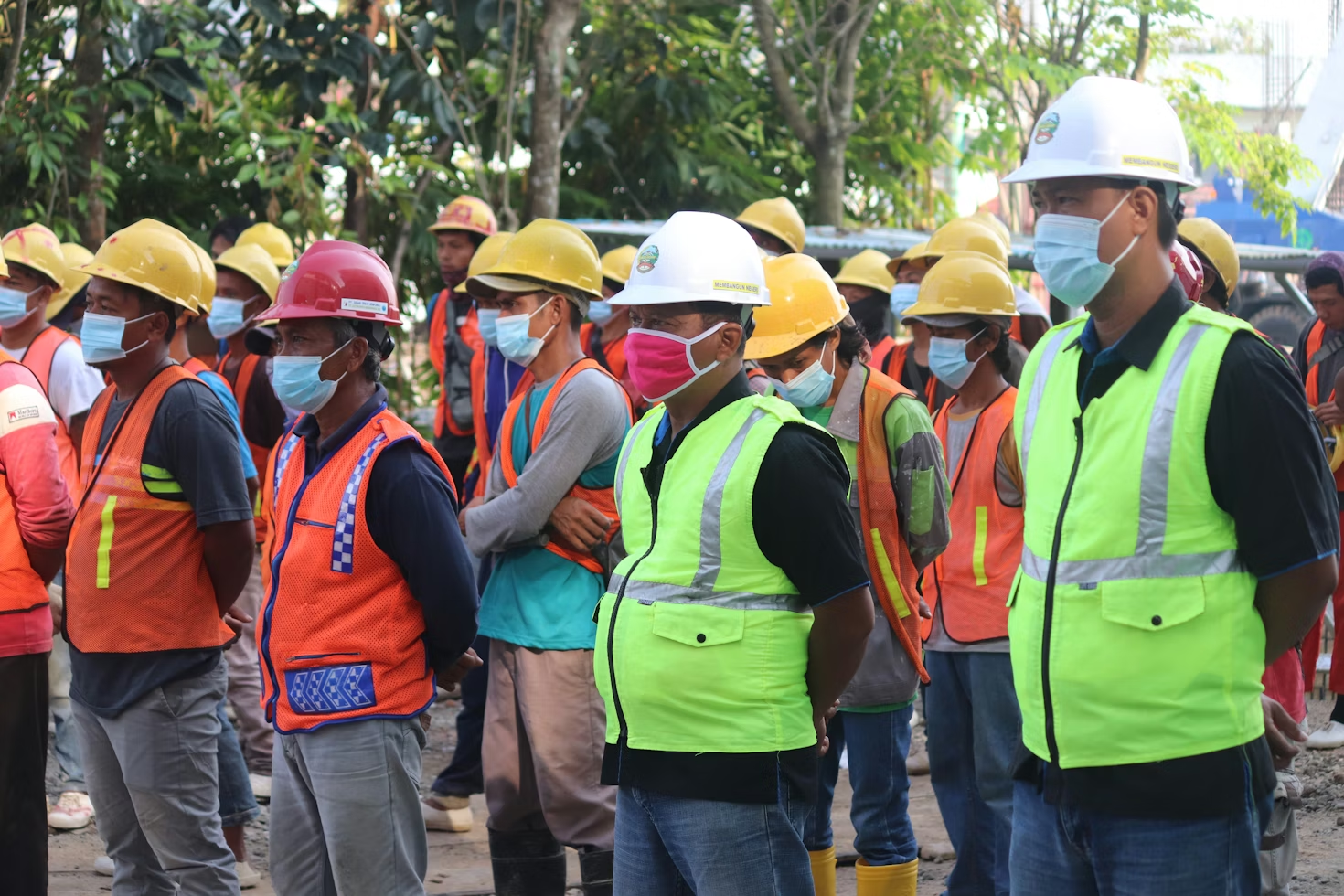
A toolbox talk is a short safety meeting conducted before starting a job. It is used to discuss the work scope, hazards, control measures, PPE, permits, and any important safety points related to the task.
In industrial maintenance, toolbox talks are very important because maintenance work can involve electrical hazards, rotating equipment, work at height, stored energy, hot surfaces, pressure, chemicals, and changing site conditions.
A good toolbox talk helps the team understand the job before work starts.
What Is a Toolbox Talk?
A toolbox talk is a short and focused safety discussion with the work team before starting the job.
It is usually conducted at the work location or near the work area.
The purpose is to make sure all workers understand:
- What work will be done
- Where the work will be done
- What hazards are involved
- What controls are required
- What PPE must be used
- What permits are required
- What to do in an emergency
- Who is responsible for the job
A toolbox talk should be simple, clear, and directly related to the actual work.
Why Toolbox Talks Are Important
Toolbox talks are important because they improve communication before work starts.
They help prevent incidents caused by:
- Poor communication
- Wrong assumptions
- Missing hazards
- Unclear job scope
- Wrong tools
- Wrong isolation
- Missing PPE
- Unsafe access
- Confusion between teams
- Lack of awareness
Many maintenance incidents happen because workers start the job without fully understanding the risks.
When Should a Toolbox Talk Be Conducted?
A toolbox talk should be conducted before starting maintenance work, especially when the job involves risk.
Common examples include:
- Electrical panel maintenance
- Motor replacement
- Pump maintenance
- Compressor maintenance
- Work at height
- Hot work
- Confined space entry
- Lifting work
- Cable laying
- Transformer maintenance
- Shutdown work
- Crane maintenance
- Troubleshooting
- Contractor work
For routine daily tasks, a short toolbox talk can still help remind workers of important safety points.
Who Should Conduct the Toolbox Talk?
A toolbox talk is usually conducted by:
- Maintenance supervisor
- Maintenance engineer
- Team leader
- Permit receiver
- Safety officer
- Responsible technician
The person conducting the toolbox talk should understand the job, hazards, and control measures.
The discussion should involve the workers, not be one-way talking only.
Who Should Attend the Toolbox Talk?
Everyone involved in the job should attend.
This may include:
- Electrical technicians
- Mechanical technicians
- Helpers
- Contractors
- Operators involved in isolation
- Safety inspector if required
- Riggers or lifting team
- Supervisors
If a worker joins the job later, the toolbox talk should be repeated or explained to that worker before they start.
Main Topics in a Toolbox Talk
A good toolbox talk should cover:
- Job scope
- Work location
- Equipment tag number
- Work permit requirements
- JSA or risk assessment
- Main hazards
- Control measures
- Required PPE
- Tools and equipment
- Isolation and LOTO
- Emergency response
- Communication method
- Stop work authority
The discussion should be specific to the job, not generic.
Toolbox Talk Checklist
| Topic | What to Discuss |
|---|---|
| Job scope | What exactly will be done |
| Location | Work area and equipment tag |
| Permit | Required permits and validity |
| JSA | Job steps, hazards, and controls |
| LOTO | Isolation points and verification |
| PPE | Required PPE for the task |
| Tools | Correct and inspected tools |
| Access | Safe access and working platform |
| Barricade | Area control and warning signs |
| Emergency | Emergency contact and response |
| Roles | Who is doing what |
| Stop work | When to stop the job |
Toolbox Talk for Electrical Work
For electrical maintenance, the toolbox talk should cover:
- Electrical isolation
- LOTO requirements
- Verification of zero voltage
- Arc flash risk if applicable
- Use of insulated tools
- Panel identification
- Back-feed possibility
- Control voltage from other sources
- Updated electrical drawings
- Authorized electricians only
- Barricading the work area
Electrical work should never start without proper isolation and verification.
Toolbox Talk for Mechanical Work
For mechanical maintenance, discuss hazards such as:
- Rotating parts
- Pinch points
- Stored pressure
- Hot surfaces
- Heavy lifting
- Sharp edges
- Oil leakage
- Slippery floor
- Coupling guard removal
- Manual handling
- Alignment work
Mechanical work may also require electrical isolation if motors or powered equipment are involved.
Toolbox Talk for Work at Height
For work at height, discuss:
- Approved Work at Height permit
- Access method
- Scaffold or platform inspection
- Harness and lanyard inspection
- Anchor point
- Barricade below
- Tool lanyards
- Weather condition
- Rescue plan
- Competency of workers
No work at height should start if safe access or rescue arrangement is not ready.
Toolbox Talk for LOTO
For lockout/tagout activities, discuss:
- Equipment to be isolated
- Energy sources
- Isolation points
- Personal locks and tags
- Stored energy release
- Verification of zero energy
- Who applied each lock
- Who is authorized to remove locks
- Restart procedure
LOTO must be understood by everyone involved in the job.
Toolbox Talk for Hot Work
For hot work, discuss:
- Hot work permit
- Fire watch
- Fire extinguisher
- Flammable materials nearby
- Gas testing if required
- Spark containment
- Welding cables
- PPE
- Ventilation
- Emergency response
Hot work should not start if fire controls are not ready.
Toolbox Talk for Confined Space Work
For confined space work, discuss:
- Confined space permit
- Gas testing
- Ventilation
- Entry and exit method
- Standby man
- Communication
- Rescue plan
- Lighting
- PPE
- Emergency response
Confined space work is high risk and must be controlled carefully.
Common Hazards Discussed in Toolbox Talks
Common hazards include:
- Electrical shock
- Arc flash
- Rotating equipment
- Stored pressure
- Work at height
- Dropped objects
- Hot surfaces
- Chemical exposure
- Noise
- Dust
- Sharp edges
- Pinch points
- Slips and trips
- Poor lighting
- Manual handling
- Simultaneous work
The hazards should match the actual task.
Good Toolbox Talk Example
Task: Replace a motor coupling on a pump.
A good toolbox talk should discuss:
- Pump tag number and location
- Work permit status
- Electrical isolation and LOTO
- Process isolation if required
- Release of pressure
- Coupling guard removal
- Pinch points
- Manual handling of coupling parts
- Tools required
- Alignment after replacement
- Reinstallation of guard
- Test run precautions
This makes the team aware of the job steps and risks.
Poor Toolbox Talk Example
A poor toolbox talk sounds like:
“Work safely, wear PPE, and be careful.”
This is too general and does not help the team understand the actual job hazards.
A toolbox talk should be specific, practical, and related to the task.
How Long Should a Toolbox Talk Be?
A toolbox talk does not need to be long.
A good toolbox talk may take 5 to 15 minutes depending on the job.
For high-risk jobs, it may take longer because the team must review the permit, JSA, isolation, rescue plan, and special controls.
The goal is quality, not length.
Toolbox Talk Documentation
Many companies require toolbox talks to be documented.
A toolbox talk record may include:
- Date
- Time
- Work location
- Job description
- Permit number
- Main topics discussed
- Names and signatures of attendees
- Supervisor name
- Safety representative if required
Documentation helps prove that the team was briefed before starting work.
Common Toolbox Talk Mistakes
Common mistakes include:
- Making it too general
- Not discussing the actual job
- Not involving the workers
- Not reviewing the JSA
- Not checking if workers understand
- Missing new workers joining later
- Not discussing emergency response
- Not discussing stop work authority
- Treating it as paperwork only
- Repeating the same topic without relevance
A toolbox talk should improve awareness, not just complete a form.
Stop Work Authority
Toolbox talks should remind workers that they have the right to stop work if conditions are unsafe.
Work should stop if:
- Isolation is not confirmed
- Permit is not approved
- Access equipment is unsafe
- PPE is missing
- Weather changes
- New hazards appear
- Work scope changes
- Tools are unsafe
- Rescue plan is not available
- Workers are unsure about the task
Stopping unsafe work is a sign of good safety culture.
Tips for Effective Toolbox Talks
To make toolbox talks effective:
- Keep it short and focused
- Discuss the actual job
- Ask workers questions
- Review the JSA
- Confirm permits
- Mention key hazards
- Explain control measures
- Confirm PPE
- Encourage workers to speak up
- Repeat important points clearly
The best toolbox talks are practical and interactive.
Safety Notes
A toolbox talk does not replace a work permit, JSA, risk assessment, LOTO procedure, or company safety rules.
It supports safe work by making sure the team understands the job and hazards before starting.
If the job changes, stop and review the toolbox talk and JSA again.
Conclusion
A toolbox talk is a simple but important safety activity before maintenance work.
It helps the team understand the job scope, hazards, control measures, PPE, permits, isolation, and emergency response.
For electrical maintenance, mechanical maintenance, work at height, LOTO, hot work, confined space, and shutdown jobs, a good toolbox talk can prevent confusion and reduce incidents.
A toolbox talk should be specific, practical, and discussed with the workers before work starts.