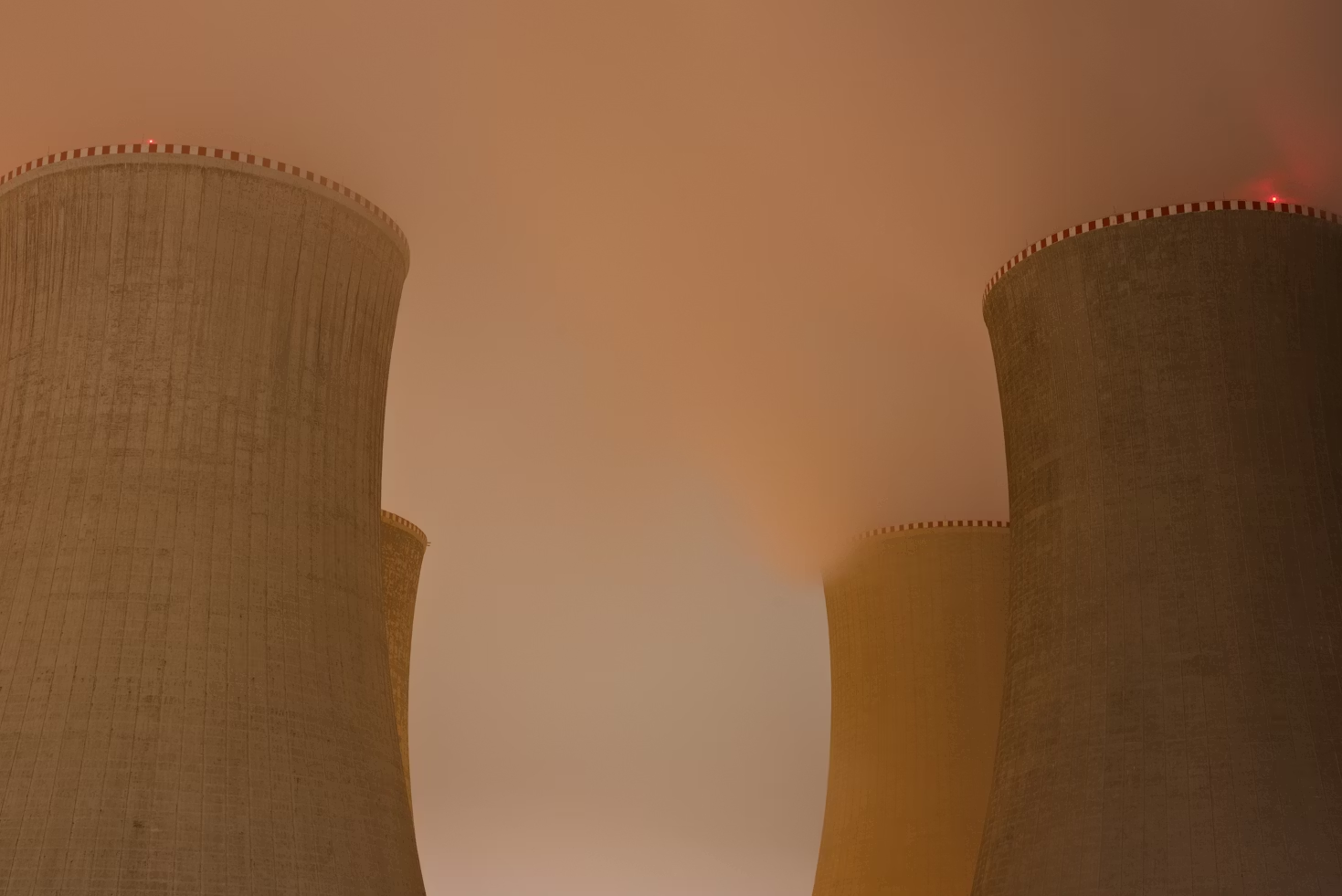
Cooling towers are important utility equipment in many industrial facilities. They are used to remove heat from water and support systems such as chillers, compressors, process cooling, HVAC systems, and production equipment.
A cooling tower failure can cause high water temperature, chiller trip, poor cooling, process problems, high energy consumption, and unexpected shutdowns.
Preventive maintenance helps keep cooling towers reliable, clean, efficient, and safe.
What Is a Cooling Tower?
A cooling tower is a heat rejection system that cools water by using air movement and evaporation.
Warm water enters the cooling tower and is distributed over fill material. Air passes through the tower and removes heat from the water. The cooled water is then returned to the system.
Cooling towers are commonly used with:
- Chillers
- HVAC systems
- Air compressors
- Process cooling systems
- Heat exchangers
- Production machines
- Utility cooling water systems
Why Cooling Tower Maintenance Is Important
Cooling towers operate in outdoor conditions and are exposed to dust, heat, humidity, sunlight, biological growth, scale, corrosion, and water contamination.
Without maintenance, cooling towers may develop problems such as:
- Poor cooling performance
- High water temperature
- Scale buildup
- Algae growth
- Corrosion
- Nozzle blockage
- Fill blockage
- Fan vibration
- Gearbox problems
- Pump issues
- Water leakage
- Drift eliminator damage
- High chemical consumption
Regular maintenance helps avoid these problems.
Safety Before Cooling Tower Maintenance
Before starting cooling tower maintenance, follow site safety procedures.
Basic safety steps include:
- Obtain work permit if required
- Inform operation team
- Stop equipment safely if required
- Isolate electrical power
- Apply lockout/tagout
- Use proper PPE
- Use safe access equipment
- Follow work at height requirements if applicable
- Be careful of slippery surfaces
- Handle chemicals safely
- Avoid contact with rotating fan parts
- Follow biological safety precautions if required
Cooling towers may involve rotating equipment, chemicals, wet surfaces, and elevated access.
Cooling Tower Preventive Maintenance Checklist
| Inspection Point | What to Check |
|---|---|
| Basin | Dirt, sludge, algae, corrosion, and water level |
| Fill media | Scaling, blockage, damage, and biological growth |
| Spray nozzles | Blockage, damage, and water distribution |
| Drift eliminators | Damage, displacement, and cleanliness |
| Fan | Blade condition, vibration, noise, and rotation |
| Fan motor | Current, temperature, noise, and vibration |
| Gearbox | Oil level, oil leakage, noise, and temperature |
| Belts | Tension, cracks, wear, and alignment if applicable |
| Pump | Pressure, flow, noise, vibration, and leakage |
| Water treatment | Chemical level, dosing, and water quality |
| Strainers | Blockage and cleaning condition |
| Valves | Leakage and correct position |
| Structure | Corrosion, cracks, and loose parts |
| Louvers | Cleanliness and physical condition |
| Electrical panel | Alarms, terminals, and control components |
Daily Cooling Tower Checks
Daily checks may include:
- Cooling water temperature
- Basin water level
- Fan operation
- Pump operation
- Abnormal noise
- Abnormal vibration
- Water leakage
- Chemical dosing status
- Control panel alarms
- Visible water distribution
- General cleanliness
Daily checks help detect urgent problems early.
Weekly Cooling Tower Checks
Weekly checks may include:
- Basin condition
- Strainer cleaning
- Nozzle spray pattern
- Fan vibration observation
- Belt condition if applicable
- Gearbox oil level
- Chemical level
- Water quality readings
- Drift eliminator condition
- Access and housekeeping
Dusty or hot areas may require more frequent inspection.
Monthly Cooling Tower Maintenance
Monthly maintenance may include:
- Basin cleaning
- Fill media inspection
- Nozzle inspection
- Drift eliminator inspection
- Fan motor current check
- Gearbox inspection
- Belt tension check
- Pump inspection
- Electrical panel visual inspection
- Water treatment review
- Vibration check
- Structural inspection
Monthly records help track performance and repeated problems.
Basin Inspection
The cooling tower basin collects cooled water.
Check:
- Water level
- Sludge buildup
- Dirt accumulation
- Algae growth
- Corrosion
- Leakage
- Float valve operation
- Make-up water condition
- Overflow condition
- Drain valve condition
A dirty basin can cause pump blockage, poor water quality, and biological growth.
Fill Media Inspection
Fill media increases contact between air and water.
Check fill media for:
- Scale buildup
- Dirt accumulation
- Algae growth
- Broken sections
- Blockage
- Poor water distribution
- Sagging or collapse
Dirty or blocked fill reduces cooling efficiency.
Spray Nozzle Inspection
Spray nozzles distribute water over the fill.
Check:
- Blocked nozzles
- Broken nozzles
- Uneven spray pattern
- Missing nozzles
- Low water flow
- Scale buildup
Poor water distribution reduces cooling tower performance.
Drift Eliminator Inspection
Drift eliminators reduce water droplets leaving the tower with exhaust air.
Check:
- Damage
- Missing sections
- Dirt accumulation
- Scale buildup
- Misalignment
- Loose installation
Damaged drift eliminators can increase water loss and chemical loss.
Fan Inspection
Cooling tower fans move air through the tower.
Check:
- Fan blade condition
- Blade cracks
- Loose bolts
- Abnormal noise
- Excessive vibration
- Correct rotation
- Guard condition
- Fan balance condition
A fan problem can reduce cooling performance and damage mechanical components.
Fan Motor Inspection
Fan motor checks may include:
- Motor current
- Motor temperature
- Bearing noise
- Vibration
- Cable condition
- Terminal condition
- Cooling fan condition
- Earthing connection
Electrical checks should be done safely by authorized personnel.
Gearbox Inspection
Some cooling tower fans use gearboxes.
Check:
- Oil level
- Oil condition
- Oil leakage
- Gearbox temperature
- Abnormal noise
- Vibration
- Breather condition
- Mounting bolts
Low oil level or abnormal noise should be investigated quickly.
Belt Drive Inspection
For belt-driven towers, check:
- Belt tension
- Belt cracks
- Belt wear
- Pulley alignment
- Belt dust
- Guard condition
- Loose pulley
- Abnormal noise
Incorrect belt tension can cause slipping, vibration, and bearing problems.
Pump Inspection
Cooling tower pumps circulate water through the system.
Check:
- Pump pressure
- Flow condition
- Noise
- Vibration
- Mechanical seal leakage
- Bearing temperature
- Motor current
- Coupling guard
- Foundation bolts
- Suction strainer
Pump problems can directly affect cooling water flow.
Water Treatment
Water treatment is very important for cooling tower reliability.
Water treatment helps control:
- Scale
- Corrosion
- Biological growth
- Algae
- Bacteria
- Suspended solids
- pH
- Conductivity
Poor water treatment can damage the cooling tower, piping, heat exchangers, and chillers.
Chemical Dosing System
Check chemical dosing system components:
- Chemical tank level
- Dosing pump operation
- Injection point
- Tubing condition
- Leakage
- Chemical crystallization
- Dosing rate
- Controller settings
Use PPE and follow chemical handling procedures.
Water Quality Monitoring
Common water quality parameters include:
- pH
- Conductivity
- Total dissolved solids
- Hardness
- Chlorine or biocide level
- Alkalinity
- Microbiological control if required
- Blowdown rate
Water quality should be monitored according to site and water treatment recommendations.
Scale and Corrosion
Scale and corrosion reduce system performance.
Scale can block heat transfer surfaces and reduce cooling efficiency.
Corrosion can damage metal parts, piping, basin, and equipment.
Signs include:
- White deposits
- Rust
- Reduced flow
- High temperature
- Dirty basin
- Heat exchanger fouling
Water treatment and regular cleaning help control these issues.
Biological Growth
Cooling towers can support biological growth if not maintained properly.
Signs include:
- Algae
- Slime
- Bad smell
- Dirty water
- Blocked fill
- Slippery surfaces
Biological control should follow the approved water treatment program and local requirements.
Common Cooling Tower Problems
Common problems include:
- High leaving water temperature
- Fan vibration
- Gearbox noise
- Belt slipping
- Pump low flow
- Nozzle blockage
- Dirty basin
- Scale buildup
- Algae growth
- Water leakage
- High chemical consumption
- Drift eliminator damage
- Motor overload
- Control panel alarm
Cooling Tower Troubleshooting Checklist
| Problem | Possible Cause | What to Check |
|---|---|---|
| High water temperature | Dirty fill, fan issue, low flow | Fill, fan, pump, nozzles |
| Fan vibration | Unbalance, loose bolts, bearing issue | Fan blades, motor, gearbox |
| Low flow | Pump issue, blocked strainer, valve position | Pump, strainer, valves |
| Dirty water | Poor treatment, basin sludge | Basin, chemicals, filters |
| Gearbox noise | Low oil, wear, misalignment | Oil level, vibration, gearbox |
| Belt slipping | Poor tension, worn belt | Belt, pulley, alignment |
| Water leakage | Basin crack, pipe leak, overflow | Basin, piping, float valve |
Cooling Tower Maintenance Report
A good cooling tower maintenance report should include:
- Cooling tower tag number
- Location
- Date
- Basin condition
- Water temperature
- Fan condition
- Motor current
- Pump readings
- Gearbox oil condition
- Belt condition
- Water quality readings
- Chemical level
- Findings
- Corrective actions
- Spare parts used
- Technician name
- Engineer review
Good reporting helps track cooling tower performance over time.
Recommended Maintenance Frequency
Maintenance frequency depends on climate, water quality, dust level, operating hours, and system criticality.
A common approach is:
| Activity | Suggested Frequency |
|---|---|
| Visual inspection | Daily |
| Water temperature check | Daily |
| Basin level check | Daily |
| Chemical level check | Daily or weekly |
| Strainer cleaning | Weekly |
| Basin inspection | Weekly or monthly |
| Nozzle inspection | Monthly |
| Fill inspection | Monthly or quarterly |
| Fan and motor inspection | Monthly |
| Gearbox oil check | Monthly |
| Full cleaning | Quarterly, semi-annually, or annually |
The final schedule should follow manufacturer and water treatment recommendations.
Common Maintenance Mistakes
Common cooling tower maintenance mistakes include:
- Ignoring dirty basin
- Ignoring water treatment
- Not checking nozzles
- Running with damaged fill
- Ignoring fan vibration
- Not checking gearbox oil
- Poor chemical handling
- Ignoring algae growth
- Not cleaning strainers
- No water quality records
- Poor access safety
- Not locking out fan before inspection
Practical Field Example
A cooling tower is not cooling water properly, and the chiller is tripping on high temperature.
The maintenance team checks the tower and finds several blocked spray nozzles and dirty fill media. Water distribution is poor, and the basin contains sludge.
After cleaning the basin, nozzles, and fill, cooling performance improves.
This shows why regular inspection and cleaning are important.
Safety Notes
Before working on a cooling tower fan, motor, gearbox, or pump, isolate the power supply and apply lockout/tagout.
Be careful of slippery surfaces, chemicals, rotating parts, and work at height.
Use proper PPE when handling water treatment chemicals.
Follow site safety procedures and manufacturer recommendations.
Conclusion
Cooling tower preventive maintenance is essential for reliable cooling system operation in industrial facilities.
A good checklist should include basin inspection, fill media, nozzles, drift eliminators, fan, motor, gearbox, belts, pumps, water treatment, strainers, structure, and control systems.
Regular maintenance helps improve cooling performance, reduce energy consumption, prevent equipment trips, and extend cooling tower life.